Reading History
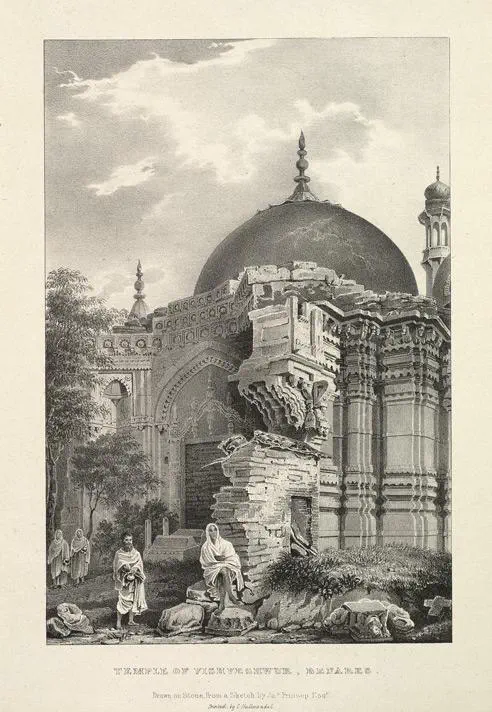 James Princep Sketch of the Kashi Vishweshwar Temple/Gyanwapi Mosque
I love reading history. If not deliberately managed, I can imagine that my diet of books will be entirely dominated by historical nonfiction. I recently came across a remarkable talk by the great historian Gajanan Bhaskar Mehendale–who passed away recently–that discussed the presentation of truth and falsehoods in history, especially Indian history. I enjoyed the talk so much that I extracted the Marathi text of the speech from the video and also got it translated to English. Thank you multi-modal LLMs!
You can click here for the original Marathi text, or here for the English translation.
I have tried to fix any mistakes in extraction or translation. I also followed up on some of the sources mentioned in the talk and have linked them here.
If you understand Marathi, the whole video is worth watching. If not, the English translation is quite good. But the TLDR version is as follows:
Mehendale points out that many of the established historians who studied the primary sources and wrote histories of India, particularly of the medieval period, purposefully suppressed reporting atrocities or religious iconoclasms carried out by the various Islamic dynasties on the local Hindu population. He gives example after example of different renowned historians, many of them recipients of the Padma awards, that indulged in hiding this information. Mehendale allows that these could be mistakes, but since their directionality is always the same, they do not appear to be random errors but purposeful omissions that hide the facts. According to Mehendale the sole job a historian is to state what happened, as it appears in the documents.
जे काही घडलं ते कागदपत्रांमधनं जसं दिसतं तसं सांगणं एवढंच इतिहासकाराचं काम आहे.
For whatever reason, these historians failed at doing so. Mehendale hints that this happened because they were writing history that fit to a certain ideology, likely to satisfy their sponsors in the newly independent Indian government. Mehendale suggests a fairly common sense approach to evaluate statements of any person.
मात्र मी स्वतः एक पथ्य पाळतो. कुण्या इतिहासकाराने पाळलं पाहिजे. आपल्याला माहिती असतं की अमुक मनुष्य अमुक समूहातला आहे. म्हणजे अमुक धर्माचा आहे, अमुक जातीचा आहे, अमुक विचारप्रणालीचा आहे. पण म्हणून त्याचं म्हणणं खोटं ठरत नाही. तेव्हा तुम्ही टीका कराल किंवा आक्षेप घ्याल तेव्हा तो त्या विधानावर घेतला पाहिजे. तुम्हाला माहित असला हेतू…असतो, हेतू नसतो असं अजिबात नाहीये. पण हेतू कळला म्हणून त्याचं म्हणणं खोटं आहे असं सिद्ध होत नाही. तर हे पथ्य पाळलं पाहिजे आणि मी हे पथ्य पाळतो.
It is somewhat understandable why the government then would have wanted to suppress historical facts. India had just been violently partitioned along Hindu-Muslim religious lines. Pakistan was created specifically for the Muslims, but enough Muslims remained in a secular India alongwith Hindus. They probably did not want to inflame passions further by recording and remembering the injustices wrought by foreign invaders–who happened to be Muslim. This assumed that Indian Muslims associated themselves with these foreign invaders, which may or may not have been true. I would assume that Indian Muslims are far closer culturally and genetically to Indian Hindus than to these primarily Turkic/Persian/Afghan invaders.
Regardless, the fact that these plainly obvious historical facts were not even acknowledged has undoubtedly led to our present political scenario. We probably needed something like a Truth and Reconciliation commission a la South Africa that acknowledged past injustices and paved the way for a joint, united future. Perhaps there is still time for one.
English Translation
The topic is… Namaskar… The topic is Truth and Untruth in History.
Now, let me explain what I mean by “truth and untruth in history.” People can look at the same thing from two different perspectives. That is the work of commentators. That is not the “truth and untruth” I am referring to. The “truth and untruth” I am referring to is when people twist what is written in the original sources and present it differently. That is the truth and untruth I mean: what is written in the original source versus what you are claiming based on it.
Secondly, I will state at the outset the conclusion I intend to draw from this. Any government, not just in India but in any country in the world, has some ideology. And textbooks are created according to that ideology. History is written accordingly. Then, it keeps getting rewritten. And therefore, these official histories—as I mentioned once before, some of you may have been present—these official histories are not true in every sense. Regarding the official British history of the First World War, one reviewer commented—it was presented as an ‘Official History’—that “It is official, but it is not history.” The very reason for this is that it is an official history.
And that is why institutions like the Bharat Itihas Sanshodhak Mandal, which think independently, are necessary. They should never tie themselves to the yoke of any university. The temptation is there, the allure. You will get government aid, you will get money, you will get all of that—just that the research will not happen. For so long, the vast amount of research that has happened at the Mandal has been without any government aid, and it can continue to be so in the future. From the examples that follow, you will realize how many falsehoods are told. This is one of my purposes in telling you this.
My second purpose is to emphasize that to understand whether something is true or false, to know what was originally written, one must know the languages. For instance, to speak of medieval Marathi history, one must know the Modi script for Marathi, one must know Persian, one must know Dutch and Portuguese. And merely knowing Persian is not enough. The reason is that everyone in Iran knows Persian; they don’t all become historical researchers. Therefore, Persian too is just a tool. I will go beyond it to speak the truth. And a historian should never adopt the pretense that “I will guide society.” That is not the historian’s job. Let the social leaders, whoever they may be, do that work.
The historian’s sole job is to state what happened, as it appears in the documents. Many people pretend—-perhaps because they are too lazy to learn Modi or Persian—-that no, what is important is to offer commentary, and that history is constantly changing, and so on. My experience is that 90% of history remains as it is. There can be differences of opinion about the remaining 10%, as new evidence comes to light. Let me give you an example. A man once asked me, “How did Shivaji Maharaj kill Afzal Khan? I mean, did he use a dagger, tiger claws, or a sword? How exactly was he killed? Who struck the first blow?”
So I told him, “The Shiva Bharat says such-and-such, and the Shiva Bharat is a reliable text; its author was a contemporary of Shivaji Maharaj, someone close to him.”
He said, “That’s not what I’m asking. I’m not asking what the Shiva Bharat says. I am asking you, how did Shivaji Maharaj kill Afzal Khan?”
I said, “I cannot tell you that, because I was not there at the time.”
So, no matter how much of a commentator a historian may be, in the end, he is a prisoner of his sources. He must remain within their confines. He can discuss the extent to which the sources are reliable or unreliable. I have stated the conclusions of this talk first, and now I will support them with the following examples.
A monthly journal called Social Scientist is published from New Delhi. It seems to have some connection with the Jawaharlal Nehru University, popularly known as JNU. They published a joint January-February 1990 issue of Social Scientist. In their terms, that was Volume 18, Numbers One and Two, combined.
In it, twenty-five people from the JNU’s own branch, the Centre for Historical Studies, had issued what we can call a circular—-it’s like an article—-a circular. The title of this circular was ‘The [Political] Abuse of History: Babri Masjid and Ramajanmabhumi Dispute’. It was signed by twenty-five people. I won’t list all the names. They were all professors, doctorates, eminent people. By eminent, I mean they were advanced in age and renown. I will mention a few names. The very first name on the list is Sarvepalli Gopal. Many of you might know, Sarvepalli Gopal was the son of Radhakrishnan. The second name was Romila Thapar. The third was Harbans Mukhia. Another was K.N. Panikkar. And another was Bipan Chandra. So you can see that these were heavyweight names, distinguished people. These people had issued that statement. In that statement, on page 79, the article begins on page 76, it’s a six-page article, and on page 79 they had asserted that there is no mention in the Baburnama of any temple being demolished in Ayodhya. That was their assertion. This is a half-truth, and in fact, a half-truth is a falsehood. It’s just called a half-truth. I’ll tell you why. A lie can be told in a single sentence. Explaining how it is a lie takes up much more space.
The Baburnama was originally written in the Turki language. Its English translation was done in two volumes by Annette Beveridge, the wife of the renowned historian Beveridge. The title is The Baburnama in English. The name Babar is also pronounced as Babur.
During Akbar’s reign, a Persian translation of this Baburnama was commissioned from Abdur Rahim Khan-i-Khanan, who was Bairam Khan’s son. There are other copies of the Baburnama as well. But whichever copy of the Baburnama you take, pages are missing from the middle. In some, 10 pages, in some 15, in some 25 pages are missing. They have never been found. To this day, they have not been found. When they went missing, or why they went missing, nobody knows. The guess is that during Humayun’s frantic flight from Sher Shah, in that chaos, those pages from the middle were lost somewhere, and that is why they are missing. Now, the narrative reaches the point where Babur arrives near Ayodhya, and then the next 15-20 pages are missing. Therefore, we know nothing about whether Babur did or did not order the demolition of a temple in Ayodhya. Suppose those pages are found tomorrow; it is possible we might find that Babur ordered, “Demolish that Rama temple in Ayodhya.” And it is also possible that no such mention will be found. Anything is possible. Therefore, their statement that there is no mention in the Baburnama of a temple being demolished is not correct; it is deceptive. What should they have said? They should have said that in the available portion of the Baburnama—the extant portion—there is no such mention. This would have let the reader know that, oh, some part of the Baburnama is missing. They should also have clarified that the section concerning Ayodhya, where chronologically this information would have been expected to appear—-whether it was demolished or not, whatever the case may be—-that very section is not available. And yet, these twenty-five people have made such a claim.
Many times, what happens is-—I have observed this-—that the mistakes made by all these people all tend to be in the same direction. Therefore, they are not mistakes made by accident. They are intentional mistakes. However, I personally observe a rule; one that any historian should follow. We may know that a certain person belongs to a certain group—-that they are of a certain religion, a certain caste, a certain ideology. But that alone does not prove their statement to be false. So when you criticize or object, you must do so against the statement itself. You may be aware of their motive—-it’s not at all that motives don’t exist. But knowing the motive does not prove that their statement is false. So, this discipline must be observed, and I observe it.
Let me give some more examples. I will start with a very well-known one. And I am making a point of providing at least two examples for each person, so that you’ll notice the consistent direction of their intellectual journey.
I’ll begin with the first example. It concerns a very well-known man, Mohammad Habib. He sometimes spells his name with an ‘Mo’ and at other times with a ‘Mu’. I don’t know why he does this; his name is printed differently on different books. This is Mohammad Habib, the father of Irfan Habib, the famous professor from Aligarh. He was a Marxist. He wrote a book titled Sultan Mahmud of Ghazni. The second edition of this book is dedicated to Mao Tse-tung, Chou En-lai, and, I believe, two others, Liu Shao-chi and Lin Piao. This is to say, he was a rather staunch Marxist.
Regarding two errors, or falsehoods, committed by him… one should, as far as possible, avoid saying a person is “lying.” It is better to say that what they are saying is “not true.” It just seems more appropriate. The word “falsehood” feels a bit softer than “lie,” so that is the approach I will take.
Mohammad Habib wrote an account of Timur’s invasion of India, which took place in 1398. Under the auspices of the Indian History Congress, a major historical project called the Comprehensive History of India was undertaken. The fifth volume, titled The Delhi Sultanate, was co-edited by him. His fellow editor was Khaliq Ahmad Nizami, who was once his student and later his colleague.
Now, there are two texts that describe Timur’s invasion of India. The first is titled Malfuzat-i-Timuri. Malfuzat means ‘utterances’ or ‘sayings’; it is the plural of malfuz. However, its conventional meaning has also come to be ‘annals’ or ‘history’. The title Malfuzat-i-Timuri uses the word in this sense. Its full text has not been published. However, in the third volume of Elliot and Dowson’s famous work, The History of India, as Told by Its Own Historians, an English translation of the entire section concerning his invasion of India is printed. This Malfuzat-i-Timuri was also translated into Persian during the reign of Shah Jahan. The original text is in Turki. It is considered Timur’s autobiography because it is written in the first person, though he probably had a courtier write it for him.
The second text is called the Zafarnama. Zafar means ‘victory’. This Zafarnama was commissioned by Timur’s grandson, Ibrahim, and it was written by Sharafuddin Ali Yazdi. There isn’t much difference between the Zafarnama and the Malfuzat-i-Timuri. One key difference is that it is slightly abridged, though not by much. The second difference is that it is written in the third person. Timur is referred to with titles like ‘Badshah’ or ‘Sahib-i-Qiran’. It is not in the first person. That is the only real difference. Otherwise, the two texts are nearly identical. The section of the Zafarnama on the invasion of India is also printed in the third volume of Elliot and Dowson that I mentioned earlier.
The account of Timur’s invasion that Mohammad Habib provides in the fifth volume of the Comprehensive History of India is based entirely on the Zafarnama, a fact he acknowledges himself. Now, in presenting this account, he claims that Timur’s invasion of India was solely for the purpose of plunder and nothing else-—that he was just a looter.
Timur himself says—and these quotes are found in both the Malfuzat and the Zafarnama, appearing in ten separate places in the Malfuzat—that “I have invaded to wage war against the infidels; this is my jihad.” And why did he do this? “Because the Islamic rulers in India have become extremely weak, and the infidels have grown insolent. I have invaded India to teach them a lesson.” This is what he says.
So, there is a difference of opinion between him and Mohammad Habib. During Timur’s time, it wasn’t possible to express such a disagreement. But now it is possible, and so he did.
Now, there is an incident from this invasion. Near Delhi, there is a town called Loni. It may have since been absorbed into Delhi or become one of its suburbs. Regarding Loni, he states in his autobiography—and it is also in the Zafarnama—that his army rounded up all the townspeople. They separated the Hindus and the Muslims. Of these, the Hindus were massacred. The Muslims, of course, were let go.
Now, Mohammad Habib’s proposition that this invasion had only one dimension, plunder, and no other, is directly contradicted by this incident at Loni. This presented a major problem for him. And he solved it—-as the English saying goes, he ‘cut the Gordian knot’—-in a very simple way. He just omitted the incident altogether. Now, this is hardly a sign of intellectual honesty. But that is what he did. That is what Mohammad Habib did.
Let me give you another example, also involving Mohammad Habib.
The victories of Alauddin Khilji were described by Amir Khusrau, who is famous as a poet but also wrote prose. His book is called Khazain-ul-Futuh, which means ‘The Treasuries of Victory.’ It describes Alauddin’s victories as well as the constructions he undertook. The main construction was a great minaret he began to build for the famous Quwwat-ul-Islam mosque, meaning ‘The Might of Islam’, which lies next to the Qutub Minar. The minaret was never completed because he was attempting to build it on a very grand scale. Amir Khusrau describes how the stones required for this minaret were acquired. He writes that a jihad was declared, as it were, against temples. One normally declares jihad against people, but here it was against temples. That is to say, temples were demolished, their stones were brought, and they were used for that minaret. This is how Amir Khusrau described it.
Mohammad Habib produced an English translation of this Khazain-ul-Futuh, titled The Campaigns of Alauddin Khilji. Incidentally, most of the books I’m mentioning are available for free on archive.org. While producing this translation, he encountered a major problem: Alauddin demolished temples… so what was to be done? He devised a strategy. The Persian word used there for temples, in its plural form, was ‘sanam-khana-ha’. I mention this because many people are learning Persian these days, and those who are learning will know that the suffix ‘-ha’ is used to form plurals in Persian. Thus, ‘sanam-khana-ha’ means many ‘sanam-khanas’, or temples.
‘Sanam’ is an Arabic word meaning ‘idol.’ In short, there is no difference whatsoever between a ‘sanam-khana’ and a ‘but-khana,’ both meaning ‘house of idols’ or temple. Despite this, Mohammad Habib translated the word as ‘castles’.
Now, who would claim that he didn’t know Persian? Khazain-ul-Futuh is an extremely complex prose text. I admit that just because Amir Khusrau wrote it, it isn’t fair to call it complex, but it is complex nonetheless. A person who translates such a text must have an excellent command of Persian. But perhaps someone defending him might say, “Oh, it must have been a mistake. Maybe he didn’t know the meaning of that word, so he made an error. Why make such a big deal about it?”
But no, he knew the meaning of that word very well. This is because later in the same text, the word ‘asnam’ appears, which is the Arabic plural of ‘sanam’. And he has translated it correctly as ‘idols’. Knowing plurals in Arabic is quite an achievement, as there are 16 or 17 different ways to form them.
So, Mohammad Habib knew the meaning of the word ‘sanam’. Not only that, he also knew its plural form. And yet, he still translated the word ‘sanam-khana’ as ‘castles’ instead of ’temples’.
These are the two examples concerning Mohammad Habib that I wanted to share with you.
Let me tell you about another writer. His name is Banarsi Prasad Saksena. He was a professor at Allahabad University.
In the book I mentioned, Khazain-ul-Futuh, it is said that Alauddin conquered Chittor in 1303. Amir Khusrau states that he was present with Alauddin at the time, and after the fort was captured—-that is, after the war ended—-Alauddin gave an order to kill any Hindu, wherever he may be found. “Cut them down.” And accordingly, 30,000 people were cut down that day. This is what is stated in the Khazain-ul-Futuh. The word “Hindu” is from that very text; it is not my own addition. I have not interpreted it in any way. The word used there is “Hindu.”
Now, in the book I told you about, A Comprehensive History of India, Volume Five: The Delhi Sultanate, the chapter on Alauddin Khilji was written by this very Banarsi Prasad Saksena. And in his description of the siege of Chittor, he has written that Alauddin ordered the killing of 3,000 muqaddams. A muqaddam is a leader. In Marathi, we say mukadam. It is an Arabic word, and in the past, a village headman was called a mokadam or village headman. Now, to begin with, Alauddin had not specified any number of people to be killed. Second, he had not ordered the killing of muqaddams either. He had said, “Kill any Hindu you find.” And who did this? Alauddin did. Banarsi Prasad Saksena was not at fault in any way for the original act. So, there was no reason for him not to write the truth. But he did not do so. He wrote “3,000 muqaddams.” And who was the editor of that volume? Mohammad Habib. Now, if you are the editor, and you have translated that work as The Campaigns of Alauddin Khilji, you should have realized that this man is saying something completely different. Where did he get “3,000 muqaddams”? The source says 30,000 Hindus were killed. But he did not correct it. This blame too therefore, falls upon him.
Now, let me give you another example from Banarsi Prasad Saksena. He is the one who wrote the chapter on Alauddin. So, in 1313… sorry, I stand corrected, in 1310-11, Malik Kafur led a campaign into the south. At that time, he learned of a temple in a town called Barmatpuri—-which is a corrupted form of Brahmapuri, meaning Chidambaram. It was a rich and wealthy temple. He plundered it, and the Momins, that is, the Muslims—Momin is a word for Muslims; its literal meaning is ‘one who has faith’ or ‘a believer,’ but it is not used for Hindus; a Momin means a Muslim—-they broke the stone idols there. The term used is asnam-e-sangin, which means “stone idols.” Banarsi Prasad Saksena turned those idols into golden ones. You might wonder why he would do such a thing. By making them golden, he changes the narrative. If stone idols were broken, anyone would ask, “Why were they broken? What is the reason to break stone? It is, after all, just stone.” But if they were golden idols, it implies they were broken out of greed for the gold. In doing so, the religious context—-or rather, the context of religious fanaticism—-is removed, and the act is given a secular color, as if it were a deed done purely for gold. This was the stratagem Banarsi Prasad Saksena employed, and Mohammad Habib, despite being the editor, allowed it to pass. These are two examples I have given you regarding Banarsi Prasad Saksena.
Let me give you a third example: Khaliq Ahmad Nizami. As I mentioned earlier, he was a co-editor with Mohammad Habib for the book A Comprehensive History of India. Khaliq Ahmad Nizami is a very well-known figure. He has many books, in both Urdu and English. I will give you two examples concerning Khaliq Ahmad Nizami.
The dargah in Ajmer is very famous. The man to whom it is dedicated was a Sufi. Within Sufism, there are many orders: Chishti, Suhrawardi, Naqshbandi, and so on. The first Chishti in India was Mu’in al-Din Chishti. He came to India in the wake of Muhammad Ghori and settled in Ajmer. He had become very old. His complete biography is in a work called Akhbar al-Akhyar, which means “Biographies of the Pious.” There was a very famous Islamic scholar named ‘Abd al-Haqq Muhaddith Dihlawi—a muhaddith is an expert in Hadith—and this biographical compendium of his is considered highly authoritative. It has no room for miracles and the like. It is a very carefully composed work, and it also provides references to many other texts.
In it, there is a biography of Mu’in al-Din Chishti. It states that when he was very old, one of his disciples-—a disciple who was an officer in the army—-captured a king’s daughter in battle and presented her as a gift to Mu’in al-Din. Mu’in al-Din accepted this gift and married her. Later, she had children and so on.
Now, whether something is good or bad is relative, isn’t it? The act that Mu’in al-Din committed, was it in accordance with his religion? Yes, it was. Therefore, there was no reason for others to make a great outcry about it. This is because the Quran states in at least four or five places that infidel women captured in war are lawful for you, and you can have physical relations with them. That is the essence of it. When this is translated into Urdu, the word ‘laundiya’ is used, and it is used commonly. It means a female slave, one who has no rights whatsoever. So, the fact that Mu’in al-Din Chishti contracted this marriage is all written down.
Now, there is the Encyclopaedia of Islam, specifically its new edition. There is an old edition, and this new one is in 10 volumes. In this new edition, the biography of Mu’in al-Din Chishti was written by Khaliq Ahmad Nizami. It would be in the second or third volume, under the entry ‘Chishti, Khwaja Mu’in al-Din.’ This is pronounced ‘Muinuddin.’ In that entry, he has written that Mu’in al-Din married a king’s daughter. He has not written-—he has omitted-—that she was captured in battle and was offered to him by one of his disciples. He omitted all the details about Mu’in al-Din being quite old at the time. He wrote only that he had married a king’s daughter. In those times, things like arranged marriages were not the norm. And even inter-caste marriages were difficult, let alone inter-religious ones. And he wrote all of this based on Akhbar al-Akhyar—the book by ‘Abd al-Haqq Muhaddith that I mentioned earlier, the one called ‘Biographies of the Pious.’ And yet, he omitted the part that he found inconvenient.
The managers of the Ajmer dargah did not realize for a long time that this part should have been omitted. For a long time, there was a plaque there, and all of this was written on it. People have saved screenshots of that plaque. But later, someone criticized it, saying that this was not right. And because of that, they have now changed the plaque. There are screenshots of the new, changed plaque, as well as of the original one. So, this is the kind of deception Khaliq Ahmad Nizami engaged in.
Let me give you a second example. It shouldn’t seem as if I am declaring him guilty based on a single instance. I have many such examples of his work; as many as you would ask for. I am just giving a couple of examples because I’m looking at the clock.
The second example is from a text called Fawa’id al-Fu’ad. It is pronounced both ‘Fu’ad’ and ‘Fawad’. Fawa’id comes from fa’ida, which is like the word fayda [benefit] we use in Marathi. Fa’ida is the Arabic word, and fawa’id is its plural form. But it doesn’t just mean ‘benefits,’ although it does have that meaning. It also has another meaning: morals. The lessons we are meant to learn from an instructive story are also called fawa’id. And fu’ad or fawad means mind, soul, or heart. So Fawa’id al-Fu’ad means ‘Morals for the Heart.’ Moral principles for the mind. We could call it ‘Lessons for the Soul.’ What is this book? It is a book of utterances made by Nizamuddin Auliya from time to time. This Nizamuddin Auliya was the disciple of the disciple of the disciple of the disciple of Mu’in al-Din Chishti. In a way, you could call him a spiritual great-grand-disciple. The man who compiled this collection is named Amir Hasan. He was a disciple of Nizamuddin Auliya—the one after whom a railway station and a train are named. And whenever he would return to Delhi from military campaigns or other journeys, he would go to meet Nizamuddin Auliya. Their monastery is called a khanqah. And the master there, the head of the monastery, is called a Pir, a Shaikh, a Khwaja, a Murshid. Amir Hasan would refer to him as Shaikh. So, let’s just call him ‘Master’. He would note down what the Master said, because he found it important. He would write it down, or he would write down incidents that happened in the monastery. And he had shown his notebook to Nizamuddin Auliya, and this fact is mentioned in the notebook itself. Nizamuddin had praised him for it, saying he was doing good work. And Nizamuddin also approved of the title he had given the work. Nizamuddin had even read parts of the notebook. In places where Amir Hasan had not understood the utterances correctly, Nizamuddin had even made corrections for him. In short, Fawa’id al-Fu’ad is a contemporary book written with Nizamuddin’s knowledge and approval.
There is an incident in it. The incident is this: once, a man entered the khanqah in a frenzy. He had a knife in his hand. It is not written why he was in a frenzy. Perhaps he was intoxicated, or something had affected his mind, whatever it may be. But he entered the monastery with a knife. The people there caught him and brought him to Nizamuddin. Nizamuddin told him to take an oath: “I will not harm any Muslim.” He took the oath as instructed. After he took the oath, Nizamuddin said, “Let him go.” And so he left.
Now, this text, Fawa’id al-Fu’ad, has been printed and published. Its Urdu translation has been published. Its English translation has also been published. The English translation is titled Nizam ad-Din Awliya: Morals for the Heart. It was translated by a man named Bruce Lawrence. This incident is written in it. And it is written exactly as I just told you: that Nizamuddin asked him to take an oath that ‘I will not harm any Muslim.’ That is precisely what is written there.
Khaliq Ahmad Nizami was the guru of this Bruce Lawrence—-in Persian, you could say, or in history. Therefore, Khaliq Ahmad Nizami wrote the preface for it. Now, in that preface, Khaliq Ahmad Nizami has sketched the personality of Nizamuddin Auliya. And he has sketched it through various incidents. Some incidents are from that text, some are from outside sources. In it, Khaliq Ahmad Nizami has written about this incident. There, he has written that Nizamuddin made the man take a vow that “I will not harm anyone.” What is the original text? “I will not harm any Muslim.” But Khaliq Ahmad Nizami… the change he made… as they say in English, it’s a ‘sleight of hand.’ His cleverness is extraordinary. One must read him very carefully. You never know which path he will lead you down.
I have given you two examples. Here is one more.
A man from Morocco had come to the court of Muhammad Tughlaq; his name was Ibn Battuta. He was there for seven or eight years. And Muhammad Tughlaq had also appointed him as a judge. This Ibn Battuta described how, on the day of Eid, Muhammad Tughlaq would hold a court. In this court, the daughters of kings-—daughters of infidel (kafir) kings—-who had been captured in battle that year, would come and sing and dance. Afterwards, the Sultan would gift these girls to high-ranking amirs or any foreign dignitaries who might be present. And then other girls would come. The previous ones would be the daughters of kings. Then other girls come, and they sing and dance. He then gifts them to still others.
Now, it seems to me that if someone were to write a biography of Muhammad Tughlaq, this should be included. I feel it is an essential part. Khaliq Ahmad Nizami wrote the chapter on Muhammad Tughlaq in A Comprehensive History of India, and it is not a short chapter. It’s an eighty-two-page chapter. And yet, he has completely omitted this part. That’s what he does. He omits. If he finds something inconvenient, he omits it.
And let me just give an example right here.
A woman named Farida Khanum has written a book called Sufism: An Introduction. In it, she has done one thing—-she has written a biography of Moinuddin Chishti, and in it, as is often the case or perhaps following the example of others, she has omitted something. She has only written that Moinuddin married a king’s daughter. She has not mentioned that this girl was a captive, captured in war. This has not been mentioned.
She has also provided information about another Sufi. His name is Sayyid Nuruddin Mubarak Suhrawardi. Suhrawardi is an order of the Sufis. So this Suhrawardi used to give sermons in the court of Iltutmish. What he used to preach in those sermons has been recorded by Ziauddin Barani in the famous book, Tarikh-i-Firoz Shahi. In those sermons, he would say—-in the first of four general paragraphs, as Barani divided them-—in the first paragraph, he states that all Kafirs should be killed, but if that is not possible, then they should at least be humiliated. And what should the Sultan’s nature be like? What is an ideal Sultan like? Well, upon seeing a Kafir, his face should turn red with rage, and he should feel the urge to cut him down with his sword that very instant.
Now, this entire paragraph I just mentioned—-while summarizing the sermons of this Suhrawardi, Farida Khanum takes her information from Tarikh-i-Firoz Shahi. However, the very paragraph I just described—the very first one—-has been omitted by Farida Khanum.
I just have a list of names here so I don’t forget. Is Muhammad Tughlaq done? Yes. Who is next? Haroon Khan Sherwani. Good. He’s from the Deccan. They can’t all be from the North. He is from Hyderabad. His book, The Bahmanis of the Deccan, is very famous. He sometimes also writes his name as H. K. Sherwani.
From the Bahmani sultanate, there is a 15th-century king, a Bahmani king, named Shams-ud-din Muhammad III. He conquered a fort. After conquering the fort, he had the temples there demolished. He ordered mosques to be built in their place. Not only that, but the Sultan himself gave the azan, the call to prayer, for the first namaz. All of this is described in the Tarikh-i-Ferishta. And it is mentioned there that he killed the Brahmins—-in short, the priests—-and the other servitors of the gods who were there.
After he did this, his Wazir, Mahmud Gawan—-the famous Mahmud-—made a request to him, saying, “You have killed the Brahmins as part of a holy war, which is a welcome act. Therefore, you should now take the title of ‘Ghazi.’” A ‘Ghazi’ is one who fights against the Kafirs. Bairam Khan had made a similar request to Akbar when he killed Hemu; that he had now earned the right to take the title of Ghazi. Accordingly, the Sultan included ‘Ghazi’ as one of his royal titles.
Haroon Khan Sherwani has taken this entire account from Tarikh-i-Ferishta. And the edition he used is the same one I have used; the page numbers are the same. But Haroon Khan Sherwani has omitted this entire middle section—-the demolition of temples, the building of mosques, giving the call to prayer, the killing of those people-—all of it has been omitted. He only writes that an expedition took place, the fort was captured, the Sultan returned to the capital, and then Mahmud Gawan requested that he take the title of ‘Ghazi,’ which he did. But the original text states that Gawan specifically said, “You have killed the Brahmins as part of a holy war, for the sake of a holy war, therefore you should now take the title ‘Ghazi.’” Haroon Khan Sherwani has omitted all of this.
Let me give you another example. There was another Bahmani sultan, whose name was Ahmad Shah; he was called a Wali, a saint. He once invaded the Vijayanagara Empire. The description is in Tarikh-i-Ferishta, and it is the very same source that Haroon Khan Sherwani used; the book I used is the same one he used. So, in it, it is mentioned that he carried out massacres along the way, captured women and children, and demolished temples—-all of this is included. And what else did he do? He obtained four large brass idols. He sent those idols to Gulbarga and had them buried in the ground in front of the dargah of Sayyid Muhammad Gesudaraz. The text reads, “dar zamin nasb kunan.” Nasb means to erect or to fix. So, to fix them in the ground means to bury them in the ground. For what purpose? Ferishta explains that as well: so that the people coming to the dargah would trample them underfoot.
Now, see how Haroon Khan Sherwani describes this very incident. He says that the Vijayanagara army was playing a “waiting game,” and frustrated by this, the Bahmani army committed “atrocities.” Now, he is talking about the army, not about Ahmad Shah ‘Wali.’ This is because he later claims that the sultan was very humane, and this would contradict all of that. So he writes that the Bahmani army sent the four idols to be placed in front of the dargah of Sayyid Muhammad Gesudaraz, and he ends the sentence with, “as a good omen.”
I mean, I simply couldn’t understand it. I have never read anything like this anywhere—-placing idols in front of a dargah as a good omen. I doubt he even understood it himself. But what he did do was omit the entire text about the idols being buried for the purpose of being trampled on. This is Haroon Khan Sherwani. A very famous man. He has been the President of the History Congress and held all such positions.
Let me give you one more example. Radheshyam. In 1527, the Battle of Kanua-—also called Khanwa—-took place. Babur defeated Rana Sangram Singh, or Rana Sanga as he is called in common parlance. Before this battle, to motivate his army, Babur had issued a farman—you could call it a circular. In that farman, he had said that the gods of the Kafirs would soon be smashed. This means he had already announced what he was going to do.
Let me tell you what happened next. In 1528, Babur visited the Gwalior fort. His army had already taken the fort; he was not present at the time. But he later went to visit the fort. The fort is on a hill, surrounded by great cliffs, and on those cliffs, massive Jain idols are carved. They are Digambara idols, and they are enormous—fifty feet high.
Babur described all of this. He did so in the very sequence I am about to relate. The Baburnama, as I mentioned earlier, was translated by Annette Beveridge. He says that these idols are naked. This is correct. Then he goes on to say that there are two pools in this valley, and around those pools, 25-30 wells have been dug. Vegetables, fruits, and so on are grown using the water from these wells. It goes on like this for four or five sentences. Then he says, “This is not a bad place. The idols are its defect.” At that point, he doesn’t say the idols are naked. He has already described the idols before that. That is correct. He has used the word “naked” there. That is true. But when he says, “Urwa is not a bad place. The idols are its defect,” that is what he says.
Now, Radheshyam, in his biography of Babur, has inserted the following text in quotation marks: “Naked idols are its defect.” This means he has inserted this word in the middle. Now, what is the effect of inserting that word? Because later, Babur says, “I gave the order to destroy them.” Accordingly, their noses, ears, etc., were broken off, all of that happened. Now, someone might get the impression that Babur found the nudity of the idols objectionable. One might get the impression that he meant, “Naked idols are its defect.” But that is not the case. Babur did not say that.
If you want to interpret it that way, you are free to do so; I have no objection to that at all. You can argue about what he found objectionable. Was it the idols themselves? Or was it that the idols were not shown with any clothes on? Someone might argue that he found their depiction in a Digambara state objectionable. They should state that as their analysis. But they must not alter what is put inside quotation marks.
And the second point is that Babur had already expressed his intention to smash idols the previous year. And in that declaration, he did not say that he would smash only “naked idols.” He had already announced that “the gods of the idolaters will soon be smashed.” And he acted accordingly. This is one such act by Radheshyam.
Let me give another example from Radheshyam. In Afghanistan, there was a region called Kafiristan… About a hundred or so years ago, its name was changed to Nuristan. Because nur means light. The light of Islam spread there. The people there were kafirs; they were idol-worshippers. I won’t say that they were Hindus, because I don’t think there’s any basis to say that. But it is true that they were idol-worshippers. And for a very long time, they had not abandoned their religion, even standing up to the likes of Timur Lang. They hadn’t abandoned it until very, very recently. Now, they have all become Muslim. In that region, there was a fort named Bajaur. Babur captured this fort of Bajaur in the year 1519-—I’m recounting an earlier event here–and there were kafirs there.
He [Babur] has written, “Here, not even the name of Islam remained.” Immediately after, he says, “I gave the order for a katle-aam (a general massacre).” Meaning, he slaughtered everyone after the battle was over.Radheshyam comments here that this was not the reason for the massacre. He claims that Babur gave the order to spread terror in Punjab. Now, all of this is his own logic, his fabrication. That region of Kafiristan is not at all close to Punjab. And even if the goal was to spread terror, it’s not exactly a commendable act.
But you know what a clever lawyer does? When his client is accused of murder, and he’s taken the case, he knows there were ten eyewitnesses. He knows a full acquittal is difficult and it would certainly mean the gallows.
So he argues, “No, no, there was an argument, a scuffle, and in that fight, the person was killed.” The death is a fact. The nature of the crime is just lessened. This is why Radheshyam said we should call Babur a terrorist, not a religious fanatic. So he conceded the crime of terrorism. And said that Babur committed this act to spread terror.
And Babur committed a similar act in India when he captured the fort of Chanderi, where he ordered a general massacre of all the kafirs there. So, it’s not as if Babur did this in just one place. Now, where was he trying to spread terror in this case? Radheshyam doesn’t provide any explanation for that.
Alright. Let me give another example. Is there time? What time is it? It’s 2:53. It’s 2:53. Then I’ll stop now. Because it’s time to leave. The examples won’t end. There are plenty. Let’s take one example. Alright, I’ll wrap this up in five minutes.
Who has written this? Banarsi Prasad Saxena. In the section on Firoz Shah Tughlaq—-from that Comprehensive History of India by the Indian History Congress I mentioned earlier, which is now infamous, and I am further justifying its notoriety– in the biography he wrote of Firoz Shah Tughlaq, he has written that in India, the only one who levied the jizya according to Sharia law was Aurangzeb. No one else did. Only Aurangzeb. To counter this, I will just name the books and tell you during which reigns the jizya was in place.
The first text is the Chachnama, which is the history of the invasion of Sindh. It is called the Chachnama because the Hindu king there had a father named Chach. The book’s actual name is Fathnama-e-Sindh. But it is more famous as the Chachnama. An English translation is also available. There, in a town called Brahmanabad, Muhammad bin Qasim had imposed the jizya. The text explicitly uses the word jizya. Secondly, Mohammad Habib wrote an article titled “The Arab Conquest of Sind.” It was published in the third volume of Islamic Culture. In that article, he has acknowledged that the jizya was levied there. So that’s the jizya in Sindh. Second, Naat-e-Mohammadi. A naat is a song in praise of the Prophet Muhammad. The book is called Naat-e-Mohammadi, written by the same author as the Tarikh-i-Firoz Shahi, Ziauddin Barani. He mentions that during the reign of Shamsuddin Iltutmish, the jizya existed.
Third example. Alauddin Khilji. There is evidence from two texts for this. One is Ziauddin Barani’s Tarikh-i-Firoz Shahi, and the second proof is the epic poem Deval Rani Khizr Khan by Amir Khusrau. It, too, mentions it. So, the jizya existed during Alauddin Khilji’s reign. I’ve given three examples. The Chachnama, which is Sindh. Naat-e-Mohammadi, meaning it existed during the reign of Shamsuddin Iltutmish. Alauddin Khilji is the third.Now for the fourth.
It existed during the time of Muhammad Tughlaq. Ibn Battuta, whom I mentioned earlier, has clearly written about it. Its English translation is available as The Rehla. A Hindi translation is also available in Tughlaq-Kalin Bharat, Part One, you can see that as well. And there is also an inscription. And that inscription has been published in the 1919-20 issue of Epigraphia Indica. You can look it up. That was the fourth example.
Now I’ll give the fifth example. Firoz Shah Tughlaq. Firoz Shah Tughlaq himself says that he levied the jizya. The name of his book is Futuhat-i-Firoz Shahi. It means ‘The Victories of Firoz Shah’—‘victories’ is plural there. And its Hindi translation has been published in Tughlaq-Kalin Bharat, Part Two. There is another piece of evidence for his jizya. Just as there’s Barani’s Tarikh-i-Firoz Shahi, the section that follows where Barani left off was written by Shams-i-Siraj Afif. An English translation is available. It’s titled Medieval India in Transition. It is in Tughlaq-Kalin Bharat, Part Two. That book is in the library of the Bharat Itihas Sanshodhak Mandal. So Firoz Shah Tughlaq… which example was this? The sixth.
Seventh. Akbar abolished the jizya. Correct? We give him credit for it. He abolished the jizya. What a good man he was, wonderful, that’s right. All that is correct. But how could he abolish it? It existed, didn’t it? It existed, and therefore he abolished it. So this in itself proves that the jizya was in place before its abolition.
Which example was this? This was the sixth. Now I’ll give the seventh. Let’s take a contemporary chronicler, Khafi Khan. Aurangzeb’s son, Muhammad Mu’azzam, who ascended the throne with the name Bahadur Shah—the jizya existed in his time. His son was Jahandar Shah, but he was on the throne for only a year, so it’s not known if it existed in his time. But Aurangzeb’s great-grandson, Farrukhsiyar, had imposed the jizya. Then the Rana of Udaipur requested him to abolish the jizya. By then, Maratha power had grown immensely. Mughal power was on the wane. They abolished the jizya. But one of his nobles sent a letter to Mecca.
And the Sharif of Mecca-—that is, the descendant of the Prophet Muhammad, whoever he was—-conveyed that, according to Sharia, the jizya could not be abolished. So Farrukhsiyar reinstated the jizya. And he sent a farman (royal decree) to that effect to the Rana of Mewar. And this is mentioned in Virvinod, the famous history of Rajasthan, which is at the Mandal, written by Shyamal Das, who held the title ‘Kaviraja.’ He was the guru of Ojha—-Gaurishankar Hirachand Ojha, a very great historian of Rajasthan. So he was Ojha’s guru. Ojha was a Mahamahopadhyaya. His guru was Kaviraj Shyamal Das. He states this. So this was the example of Farrukhsiyar.
After him, Rafi-ud-Darajat, Aurangzeb’s great-grandson, became emperor, and the jizya was stopped in 1719. I have given you examples from Delhi. Now I will quickly give three from the provinces and then stop. One from Kashmir: Sikandar. He is glorified as ‘Sikandar Butshikan,’ meaning ’the iconoclast’ or ‘idol-breaker.’ He is glorified in the Tarikh-i-Ferishta. He is also glorified in Nizamuddin Ahmad’s Tabaqat-i-Akbari. The jizya existed during his time. There is a book… What is that author’s name, Chadura? Haider Malik Chadura. His book, Tarikh-i-Kashmir, mentions this. The Ain-i-Akbari mentions this. Ferishta also mentions this. And as I said earlier—-no, I didn’t say this, but Jonaraja’s Rajatarangini also mentions it. So I have now given plenty of evidence that the jizya existed in Kashmir. Later, a good sultan named Zain-ul-Abidin abolished it, that is true.
In Gujarat, Ahmad Shah, after whom the city of Ahmedabad is named. He had imposed the jizya. Ferishta has written about this. And now the eleventh example, a provincial one. The Bharat Itihas Sanshodhak Mandal itself has published a parwana (an order or permit). It is displayed in the museum. As you enter the museum, it’s the very first paper on your left, and it is bilingual—Persian on top, Hindi below. In that document, there is a direct mention of the ‘Akhad-e-Jizya,’ meaning the ‘Jizya Department,’ and other related details are there. So the jizya also existed in the Faruqi Sultanate of Khandesh.
I have given not one, not two, but eleven examples, and this man claims that no one besides Aurangzeb ever imposed the jizya. And he was a professor at Allahabad University. I won’t give any more examples; I’ll stop here. All I want to say is, whether to call such people historians or not, and whether they speak the truth or not, that is for you to decide now.
Thank you.
Original Marathi Text of the Speech
भारत इतिहास संशोधक मंडळ आयोजित ज्येष्ठ इतिहास संशोधक श्री.गजानन भास्कर मेहेंदळे यांचे व्याख्यान विषय : इतिहासातील सत्य आणि असत्य
…विषय आहे… नमस्कार… विषय आहे इतिहासातील सत्य आणि असत्य.
आता इतिहासातले सत्य आणि असत्य म्हणजे मला काय अभिप्रेत आहे ते सांगतो. एकाच गोष्टीकडे दोन वेगवेगळ्या दृष्टिकोनातून लोकं बघू शकतात. ते भाष्यकारांचं काम आहे. ते सत्य आणि असत्य मला अभिप्रेत नाहीये. मला सत्य आणि असत्य असं अभिप्रेत आहे, की मूळ साधनात काय लिहिलंय, ते विपरीत करून काही लोक सांगतात. ते सत्य आणि असत्य मला अभिप्रेत आहे. की मुळात काय लिहिलंय आणि तुम्ही काय सांगताय. त्याच्या आधारे.
दुसरं यातून जो मी निष्कर्ष काढणार आहे तो मी आधीच सांगतो. कुठलंही सरकार, मग ते भारतातलंच नाही जगातल्या कुठल्याही देशातले असो, सरकारला एक कुठलीतरी विचारधारा असते. आणि त्या विचारधारेनुसार पाठ्यपुस्तकं तयार होतात. त्यानुसार इतिहास तयार होतो. मग पुनर्लेखन होत राहतं. आणि त्यामुळे जसे सरकारी इतिहास असतात–मी मागे मी एके ठिकाणी सांगितलं काही लोक हजर पण असतील– ते सरकारी जे इतिहास असतात ते सगळ्या अर्थाने खरे नसतात. पहिल्या महायुद्धाचा जो ब्रिटिशांचा सरकारी इतिहास लिहिला गेलाय, त्याच्यावर एकाने परीक्षण असं केलं होतं, की ऑफिशियल हिस्ट्री म्हणून केला तो, की It is official but it is not history. याचं कारणच हे आहे की सरकारी इतिहास आहे तो.
आणि म्हणून भारत इतिहास संशोधक मंडळासारख्या संस्था स्वतंत्र विचार करणाऱ्या पाहिजेत. त्यांनी स्वतःला कधीही कुठल्याही विद्यापीठाच्या दावणीला बांधून घेऊ नये. त्याचा लोभ होतो, मोह होतो. सरकारी मदत मिळेल, पैसे मिळतील, ते सगळं मिळेल, फक्त संशोधन होणार नाही. इतका काळ जे संशोधन मंडळात इतक्या मोठ्या प्रमाणावर झालं ते कुठल्याही सरकारी मदतीशिवाय झालेलं आहे आणि यापुढे होऊ शकतं. हे सांगतोय मी या पुढच्या उदाहरणांवरून तुमच्या लक्षात येईल की खोटं किती सांगितलं जातं. हा एक हेतू आहे माझा हे सांगण्याचा.
दुसरा माझा सांगण्याचा हेतू असा आहे की हे खरं आहे का खोटं आहे, मुळात काय लिहिलंय हे कळण्याकरता त्या भाषा आल्या पाहिजेत. म्हणजे मराठी मध्ययुगीन इतिहासाचं बोलायचं झालं तर मराठीची मोडी लिपी आली पाहिजे, फारसी आलं पाहिजे, डच-पोर्तुगीज आलं पाहिजे. आणि नुसतं फारसी येऊन उपयोगी नाहीये. याचं कारण असं आहे, की इराणमध्ये सगळ्यांनाच फारसी येतं. ते काही सगळे इतिहास संशोधक होत नाहीत. तर त्याच्यामुळे फारसी हे सुद्धा एक साधन आहे. त्याच्या पलीकडे जाऊन मी सत्य सांगेन. आणि इतिहासकारांनी हा आव ठेवता कामा नये की मी समाजाला मार्गदर्शन करेन. हे इतिहासकाराचं काम नाही. ते समाजधुरीण जे कोणी असतील त्यांचं काम ते करतील.
जे काही घडलं ते कागदपत्रांमधनं जसं दिसतं तसं सांगणं एवढंच इतिहासकाराचं काम आहे. अनेक लोक असं भासवतात–कारण त्यांना मोडी शिकायचा, फारसी शिकायचा कंटाळा आहे हे कारण असू शकतं–की नाही, हे महत्त्वाचं आहे, भाष्य करणं. आणि इतिहास असा सारखा बदलत असतो वगैरे. माझा अनुभव असा आहे की इतिहासातला 90% भाग तसाच असतो. 10% भागाबद्दल मतभेद होऊ शकतो, नवीन पुरावे उजेडात येतात. मी एका उदाहरणाने सांगतो. एका माणसानं मला विचारलं, अफझल खानाला शिवाजी महाराजांनी कसं मारलं? म्हणजे कट्यारीने मारलं, वाघनखाने मारलं, तलवारीने मारलं, कसं काय मारलं? कोणी आधी वार केला? तर मी त्यांना सांगितलं, शिवभारतात असं लिहिलेलं आहे आणि शिवभारत हा विश्वसनीय ग्रंथ आहे, शिवाजी महाराजांचा समकालीन माणूस आहे, जवळचा माणूस आहे. तो म्हणाला ते नाही मी विचारत आहे, शिवभारतात काय सांगितलंय ते. मी तुम्हाला विचारतोय की शिवाजी महाराजांनी अफझल खानाला कसं मारलं? म्हटलं ते नाही मला सांगता येणार कारण मी तेव्हा तिथे नव्हतो.
तेव्हा कुठलाही इतिहासकार हा कितीही भाष्यकार वगैरे काही असू दे, शेवटी तो साधनांच्या कैदेत असतो, त्या मर्यादेत त्याला राहायला लागतं. साधनं विश्वसनीय कितपत आहेत, अविश्वसनीय कितपत आहेत याच्याविषयी तो चर्चा करू शकतो. हे निष्कर्ष आहेत पुढं, पण ते मी निष्कर्ष आधी सांगितले आणि आता उदाहरणं सांगायला सुरुवात करतो. सोशल सायंटिस्ट या नावाचं एक मासिक नवी दिल्लीतनं निघतं. त्याचा बहुतेक जवाहरलाल नेहरू युनिव्हर्सिटी म्हणजे जेएनयू या नावाने ती प्रसिद्ध आहे. तिच्याशी काही संबंध असावा. त्यांना सोशल सायंटिस्टच्या जानेवारी-फेब्रुवारी १९९० चा अंक एकत्र काढला होता जानेवारी-फेब्रुवारीचा. म्हणजे त्यांच्या दृष्टीनं तो वॉल्यूम 18, नंबर्स वन अँड टू एकत्र.
त्याच्यात जेएनयूमध्ये असलेल्या सेंटर फॉर हिस्टॉरिकल स्टडीज नावाची त्यांचीच एक शाखा. त्या शाखेतल्या २५ लोकांनी एक परिपत्रक म्हणू आपण, लेखासारखंच आहे ते, परिपत्रक काढलं होतं. त्या परिपत्रकाचं नाव होतं, द ॲब्युज ऑफ हिस्ट्री: बाबरी मशीद अँड रामजन्मभूमी डिस्प्युट (The Abuse of History: Babri Masjid and Ramajanmabhumi Dispute) असं त्या परिपत्रकाचं नाव होतं The Abuse of History: Babri Masjid and Ramajanmabhumi Dispute. त्याच्यावर २५ जणांच्या सह्या होत्या. मी सगळी नावं सांगत नाही. सगळे प्रोफेसर होते, डॉक्टरेट होते, मोठे लोक होते. मोठे म्हणजे वयानं मोठे होते आणि नामवंत होते. काही नावं सांगतो. एक पहिलंच नाव आहे त्यातलं सर्वपल्ली गोपाल. बहुतेकांना माहिती असेल. सर्वपल्ली गोपाल म्हणजे राधाकृष्णन त्यांचे चिरंजीव. म्हणजे राधाकृष्णन यांचे हे गोपाल हे चिरंजीव. दुसरं नाव होतं रोमिला थापर. तिसरं नाव होतं हरबन्स मुखिया. आणि एक नाव होतं के. एन. पणिक्कर. आणि एक नाव होतं बिपनचंद्र. म्हणजे तुमच्या लक्षात येईल की तालेवार नावं होती, नामांकित लोक होते. या लोकांनी ते पत्रक काढलं होतं. त्या पत्रकामध्ये पान ७९ वर, पान ७६ पासनं लेख चालू होतो, सहा पानी लेख आहे, पान ७९ वर त्यांनी असं विधान केलं होतं की बाबरनाम्यामध्ये अयोध्येत कुठलंही देऊळ पाडल्याचा उल्लेख नाही, असं त्यात विधान केलं होतं. हे अर्धसत्य आहे आणि खरं म्हणजे अर्धसत्य हे खोटंच असतं. त्याला म्हणायचं असतं अर्धसत्य. का ते सांगतो. खोटं एका वाक्यात बोलता येतं. ते कसं खोटं आहे, हे सांगायला बरीच जास्त जागा लागते. बाबरनामा हे जे पुस्तक आहे ते मूळ आहे तुर्की भाषेत. त्याचा इंग्रजी अनुवाद Annette Beveridge म्हणजे जो प्रख्यात इतिहासकार होता बेव्हरीज, त्याची पत्नी. तिनं दोन भागांमध्ये केला आहे. The Baburnama in English, असं त्याचं नाव आहे. बाबरचं बाबुर असाही उच्चार होतो.
अकबराच्या कारकिर्दीत या बाबरनाम्याचं फारसीमध्ये भाषांतर करून घेतलं अब्दुर्रहीम खानखाना म्हणजे बैरामखानाचा मुलगा. आणखीही प्रती आहेत बाबरनाम्याच्या. तुम्ही कुठलीही प्रत बाबरनाम्याची घ्या, तिच्यात अधली-मधली पानं गहाळ आहेत. कुठं १० पानं, कुठं १५ पानं, कुठं २५ पानं अशी गहाळ आहेत. कधीच मिळालेली नाहीत. आजतागायत मिळालेली नाहीयेत. कधी गहाळ झाली, का गहाळ झाली, हे काही कोणाला माहीत नाहीये. अंदाज असा केलाय की हुमायूनची शेरशहापुढं जेव्हा पळापळ चालू होती, त्या धांदलीत कुठंतरी ते मधले-मधले कागद हरवलेत आणि म्हणून ते कागद नाहीयेत. आता बाबर अयोध्येपाशी आला, इथपर्यंतची हकीकत येते आणि पुढचे १५-२० कागद गहाळ आहेत. तेव्हा बाबरानं अयोध्येत देऊळ पाडायचा हुकूम दिला का दिला नाही, यामधलं आपल्याला काही माहिती नाही. समजा उद्या ते कागद मिळाले, तर कदाचित असं असेल की बाबरानी सांगितलं की अयोध्येतलं ते रामाचं मंदिर आहे, ते पाडून टाका, असं मिळेल. आणि कदाचित असंही असेल की तसा उल्लेख मिळणारही नाही. काहीही असू शकतं. तेव्हा त्यांचं जे विधान होतं की बाबरनाम्यात देऊळ पाडल्याचा काही उल्लेख नाही, ते विधान बरोबर नाहीये, फसवे आहे. काय म्हणायला पाहिजे होतं त्यांनी? त्यांनी असं म्हणायला पाहिजे होतं, बाबरनाम्याचा जो उपलब्ध भाग आहे, extant portion, त्या उपलब्ध भागात उल्लेख नाही. म्हणजे वाचकाला कळलं असतं की अरे काही बाबरनाम्याचा काही भाग गहाळ आहे. त्यांनी हाही खुलासा करायला पाहिजे होता की अयोध्येविषयीचा भाग जिथं अभिप्रेत होतं की इथं कालानुक्रमे इथं यायला पाहिजे होतं, पाडलं, पाडलं नाही, जे काही असेल ते, तो भाग उपलब्ध नाही. आणि हे २५ लोक हे असं बोलतायत.
कित्येकदा असं घडतं की मला असं आढळून आलंय की या सगळ्या लोकांच्या ज्या चुका असतात, त्या एकाच दिशेनं झालेल्या असतात. तेव्हा त्या चुकून झालेल्या चुका नाहीयेत. हेतुपुरस्सर केलेल्या चुका आहेत. मात्र मी स्वतः एक पथ्य पाळतो. कुण्या इतिहासकाराने पाळलं पाहिजे. आपल्याला माहिती असतं की अमुक मनुष्य अमुक समूहातला आहे. म्हणजे अमुक धर्माचा आहे, अमुक जातीचा आहे, अमुक विचारप्रणालीचा आहे. पण म्हणून त्याचं म्हणणं खोटं ठरत नाही. तेव्हा तुम्ही टीका कराल किंवा आक्षेप घ्याल तेव्हा तो त्या विधानावर घेतला पाहिजे. तुम्हाला माहित असला हेतू…असतो, हेतू नसतो असं अजिबात नाहीये. पण हेतू कळला म्हणून त्याचं म्हणणं खोटं आहे असं सिद्ध होत नाही. तर हे पथ्य पाळलं पाहिजे आणि मी हे पथ्य पाळतो.
काही उदाहरणं देतो. एक सुप्रसिद्ध उदाहरण देतो. आणि मी अशी काळजी घेतोय की प्रत्येकाची निदान दोन-दोन तरी उदाहरणं देतोय. म्हणजे लक्षात येईल की एका दिशेनं त्यांचा प्रवास चाललेला आहे. पहिलं उदाहरण देतो. फार मोठा प्रसिद्ध मनुष्य आहे, मोहम्मद हबीब. ते कधी आपलं नावाचं स्पेलिंग Mo नं करतात, कधी Mu नं करतात. असं का करतात मला माहित नाहीये. निरनिराळ्या पुस्तकांवर निरनिराळ्या प्रकारे त्यांचं नाव छापलंय. हे इरफान हबीब जे प्रसिद्ध अलीगढचे प्राध्यापक आहेत, त्यांचे वडील मोहम्मद हबीब. हे मार्क्सवादी होते. त्यांनी सुलतान महमूद ऑफ गझनी (Sultan Mahmud of Ghazni) म्हणून एक पुस्तक लिहिलंय. त्याची जी द्वितीय आवृत्ती आहे, दुसरी आवृत्ती आहे, ती त्यांनी माओ-त्से-तुंग, चो-एन-लाय आणि दोघेजण आहेत मला वाटतं लिऊ शाओची आणि लिन पियाओ यांना अर्पण केलेली आहे. म्हणजे ते चांगले कडवे मार्क्सिस्ट आहेत ते. त्यांनी केलेल्या दोन चुका, असत्य… एखादा मनुष्य खोटं बोलतोय असं शक्यतो म्हणू नये. असं म्हणावं की ते बोलतात ते खरं नाहीये. म्हणजे ते बरं दिसतं. तेव्हा खोट्यापेक्षा असत्य असं म्हटलं तर जरा सॉफ्ट वाटतं. तर मी तसंच करतो. तैमुरलंगाची जी भारतावर स्वारी झाली, १३९८ मध्ये, तिची हकीगत या मोहम्मद हबीब यांनी लिहिली आहे. त्यांनी संपादित केलेलं जे इंडियन हिस्ट्री काँग्रेस, त्यांच्या विद्यमानं, एक कॉम्प्रिहेन्सिव्ह हिस्ट्री ऑफ इंडिया (Comprehensive History of India) म्हणून इतिहासाचा मोठा प्रकल्प हाती घेतला. त्यातला जो पाचवा खंड आहे, त्याचं नाव आहे दिल्ली सल्तनत. त्याचे संपादक आहेत मोहम्मद हबीब आणि एकेकाळचे त्यांचे विद्यार्थी आणि नंतरचे त्यांचे सहकारी खलिक अहमद निजामी. दोघेजण आहेत. आता तैमुरलंगानं भारतावर जी स्वारी केली तिचं वर्णन करणारे दोन ग्रंथ आहेत. पहिल्या ग्रंथाचं नाव आहे मलफुजात-ए-तिमुरी. मलफुजात म्हणजे उद्गार, असा एक अर्थ आहे. अनेकवचन आहे ते मलफुजचं. पण त्याचाच “annals”, “इतिहास” असाही त्याचा अर्थ होतो. अशा अर्थानं तो रूढार्थ म्हणून वापरला जातो शब्द–मलफुजात-ए-तिमुरी. त्याचं टेक्स्ट काही पब्लिश झालेलं नाहीये. पण इलियट अँड डाउसन यांचं जे प्रसिद्ध पुस्तक आहे, ‘हिस्ट्री ऑफ इंडिया अॅज टोल्ड बाय इट्स ओन हिस्टोरिअन्स’, त्याच्या तिसऱ्या खंडात, त्याच्या भारतावरील स्वारीचा जो भाग आहे, त्या सगळ्याचं इंग्रजी अनुवाद छापलेला आहे. आणि या मलफुजात-ए-तिमुरीचं शाहजहानच्या काळामध्ये फारसीमध्येही भाषांतर झालेलं आहे. मूळ ग्रंथ तुर्कीत आहे. ते तैमुरलंगाचं आत्मचरित्र आहे असं म्हणायचं कारण ते प्रथम पुरुषात लिहिलेलं आहे. दरबारी लोकांकडनं लिहून घेतलं असेल एखाद्या. दुसरा ग्रंथ आहे त्याचं नाव आहे “जफरनामा”. जफर म्हणजे विजय. हा जफरनामा तैमुरलंगाचा नातू होता इब्राहिम म्हणून, त्यानं लिहून घेतलाय. शरफुद्दीन अली यझदी यांनी तो जफरनामा लिहिलाय. जफरनामा आणि मलफुजात-ए-तिमुरी यांच्यात तसा काही फरक नाहीये. फरक महत्त्वाचा आहे की थोडासा संक्षेप केलाय, फार नाही. हे एक. आणि दुसरा फरक आहे, तृतीय पुरुष वापरलेला आहे. तैमुरलंगाला बादशाह वगैरे, साहिब-ए-किरान वगैरे अशा अर्थानी त्याचं संबोधन केलंय. प्रथम पुरुषात नाहीये. एवढाच फरक आहे. बाकी दोन्ही ग्रंथ जवळपास एकच आहेत. जफरनाम्याचे भारतावरच्या स्वारीचा भाग जो आहे, तो मगाशी इलियट अँड डाउसनचा जो तिसरा खंड सांगितला, त्यात छापलेला आहे. मोहम्मद हबीब यांनी कॉम्प्रिहेन्सिव्ह हिस्ट्री ऑफ इंडिया, पाचवा खंड, त्यामध्ये तैमुरलंगाच्या स्वारीची जी हकीगत दिली आहे ती सगळी जफरनाम्याच्या आधारेच दिलेली आहे. तसं त्यांनी सांगितलेलं पण आहे. आता ती हकीगत देताना ते असं म्हणतात की तैमुरलंगाची भारतावरची स्वारी ही फक्त लुटी करता झालेली होती दुसरं काही नाही तो लुटारू होता.
स्वतः तैमूरलंग असं म्हणतो–मलफुजातमध्ये आणि जफरनाम्यामध्ये ते उद्गार आहेत–दहा ठिकाणी आहे मलफुजातमध्ये, दहा ठिकाणी. की काफिरांविरुद्ध युद्ध करण्याकरता मी स्वारी केली आहे, हा माझा जिहाद आहे. आणि मी असं का केलं? तर भारतातले इस्लामी राज्यकर्ते अत्यंत दुर्बळ झालेले आहेत आणि काफीर शिरजोर झालेले आहेत. तर त्यांना धडा शिकवण्याकरता मी भारतावर स्वारी केली आहे. असं तो म्हणतो.
त्याच्यात आणि मोहम्मद हबीब यांच्यामध्ये मतभेद आहे. तैमूरलंगाच्या वेळेला शक्य नव्हतं मतभेद व्यक्त करणं. पण आता शक्य झालंय, केलं त्यांनी.
आता या स्वारीमधला एक प्रसंग असा आहे. दिल्लीजवळ एक लोनी नावाचं गाव आहे. कदाचित आता दिल्लीत समाविष्ट झालं असेल किंवा दिल्लीचं उपनगर पण असेल. त्या लोनीमध्ये तो आपल्या आत्मवृत्तात म्हणतो आणि जफरनाम्यामध्ये आहे. सगळे गावकरी धरून आणले, त्याच्या सैन्यानं. त्यांनी हिंदू आणि मुसलमान वेगवेगळे केले. आणि त्यातले हिंदूंची कत्तल केली. मुसलमानांना अर्थातच सोडून दिलं.
आता मोहम्मद हबीब यांचं जे प्रतिपादन होतं की या स्वारीला एकच अंग होतं, लूट. दुसरं काही अंग नव्हतं. त्याला या लोनीच्या प्रसंगाने छेद जातो. तेव्हा ही मोठी त्यांच्यापुढं अडचण होती. आणि त्यांनी ती–इंग्रजीमध्ये जशी म्हण आहे, ‘cut the Gordian knot’–फार सोप्या पद्धतीनं सोडवली. त्यांनी तो प्रसंगच गाळून टाकला. आता हे काही प्रामाणिकपणाचं लक्षण नाही. पण त्यांनी तसं केलं. मोहम्मद हबीबनी तसं केलं. मोहम्मद हबीबनीच केलेलं दुसरं एक उदाहरण सांगतो.
अलाउद्दीन खिलजींच्या विजयांचं वर्णन अमीर खुसरो जो कवी म्हणून प्रसिद्ध आहे पण त्यानं गद्यलेखनही केलंय. त्याचा ‘खजाइन-उल-फुतूह’ म्हणून पुस्तक आहे. खजाइन-उल-फुतूह म्हणजे विजयांचे खजिने. त्यामध्ये अलाउद्दीनच्या विजयांचं वर्णन आहे आणि त्यानं केलेल्या बांधकामांचंही वर्णन आहे. मुख्य बांधकाम म्हणजे कुतुबमिनारच्या खाली जी प्रसिद्ध मशीद आहे ‘कुव्वत-उल-इस्लाम’ जिला म्हणतात, म्हणजे इस्लामचं सामर्थ्य. तर त्या मशिदीला एक मोठा मनोरा बांधायला घेतला. आणि तो काही पूर्ण झाला नाही कारण तो खूपच मोठा मनोरा तो बांधत होता. आणि त्या मनोऱ्याकरता जे दगड लागले ते कसे आणले वगैरे वर्णन अमीर खुसरूनं केलेलं आहे. त्याच्यात तो म्हणतो की मंदिरांविरुद्ध जणू जिहाद पुकारला. म्हणजे माणसांविरुद्ध पुकारतात पण मंदिरांविरुद्ध पुकारला. म्हणजे पाडली मंदिरं, दगड आणले, त्या मनोऱ्याकरता वापरले. असं अमीर खुसरूनं वर्णन केलेलं आहे.
या ‘खजाइन-उल-फुतूह’चं मोहम्मद हबीब यांनी इंग्रजीमध्ये केलेलं भाषांतर आहे. त्याचं नाव आहे ‘The Campaigns of Alauddin Khilji’. मी सांगतोय बहुतेक पुस्तकं archive.org वर फ्री उपलब्ध आहेत. त्यांनी हे भाषांतर करताना मोठी अडचण आली, आता देवळं पाडली म्हणजे अलाउद्दीन… आता कसं काय करायचं? त्यावर त्यांनी युक्ती अशी केली की त्यांनी मंदिरं या अर्थाचा जो तिथं शब्द होता, अनेकवचनी शब्द होता ‘सनम-खाना-हा’. आता अलीकडे फारसी लोकं खूप शिकायला लागलेत म्हणून सांगतो, सगळ्यांना माहिती आहे त्या शिकणाऱ्या लोकांना तरी की ‘हा’ प्रत्यय लागून अनेकवचनं होतात फारसीमध्ये. तर ‘सनम-खाना-हा’ म्हणजे अनेक ‘सनम-खाने’. ‘सनम’ अरबी शब्द आहे. ‘सनम’ म्हणजे मूर्ती. थोडक्यात ‘सनम-खाना’ आणि ‘बुत-खाना’ याच्यात काही सुद्धा फरक नाही. ‘बुत’ म्हणजे मंदिर, असा अर्थ आहे त्याचा. असं असताना मोहम्मद हबीब यांनी त्याचं भाषांतर ‘castles’ असं केलं. आता त्यांना फारसी येत नव्हतं असं कोण म्हणेल? ‘खजाइन-उल-फुतूह’ सारखा अत्यंत क्लिष्ट गद्य ग्रंथ आहे. तो आता अमीर खुसरूनी लिहिलाय म्हणून त्याला क्लिष्ट म्हणणं बरोबर नाही, हे मला मान्य आहे. पण तो आहे क्लिष्टच. अशा या ग्रंथाचं भाषांतर करतो त्या माणसाला उत्तम फारसी येत असलंच पाहिजे. पण कदाचित त्यांचं समर्थन करणारा एखादा माणूस म्हणेल की नाही हो चुकलं असेल, नसेल अर्थ माहिती त्या शब्दाचा म्हणून चुकलं असेल. एवढं काय त्याचा बाऊ करताय. तर नाही, त्यांना त्या शब्दाचा अर्थ खूप चांगला ठाऊक होता. कारण त्याच ग्रंथामध्ये पुढे एका ठिकाणी ‘असनाम’ असा शब्द आलाय, जे ‘सनम’ या शब्दाचं अनेकवचन आहे. आणि त्यांनी त्याचा अर्थ ‘idols’ असा बरोबर केलेला आहे. अरबीमध्ये अनेकवचनं माहीत असणं हे विशेषच म्हटलं पाहिजे कारण 16-17 प्रकारे अनेकवचनं होतात. तेव्हा मोहम्मद हबीब हे, यांना सनम या शब्दाचा अर्थ ठाऊक होता. इतकंच नव्हे तर, त्याचं अनेकवचन काय होतं, तेही त्यांना ठाऊक होतं आणि तरीही त्यांनी सनमखाना या शब्दाचं भाषांतर ‘कॅसल्स’ असं केलं, मंदिर असं न करता. ही मोहम्मद हबीब यांची मी तुम्हाला दोन उदाहरणं दिली.
आणखी एक लेखक सांगतो. त्याचं नाव आहे बनारसी प्रसाद सक्सेना. हे अलाहाबाद युनिव्हर्सिटीत प्राध्यापक होते. ‘खजाइनुल फुतूह’ जो ग्रंथ सांगितला, त्यात असं म्हटलंय 1303 मध्ये अल्लाउद्दीने चितोड काबीज केलं. अमीर खुसरो असं सांगतो की मी तेव्हा अलाउद्दीनबरोबर हजर होतो आणि किल्ला काबीज झाल्यानंतर, म्हणजे युद्ध संपल्यानंतर अल्लाउद्दीननं असा हुकूम दिला की हिंदू जिथं सापडेल, तिथं त्याला ठार मारा. कापून काढा. आणि त्याप्रमाणे त्या दिवशी 30,000 लोक कापून काढण्यात आले. हे खजाइनुल फुतूहमध्ये सांगितलेलं आहे. ‘हिंदू’ असा शब्द तिथलाच आहे, माझ्या पदरचा नाही. मी अर्थ-बिर्थ काही लावलेले नाहीत. तिथंच म्हटलंय ‘हिंदू’. आता जो मी तुम्हाला ग्रंथ सांगितला, ‘अ कॉम्प्रिहेन्सिव्ह हिस्ट्री ऑफ इंडिया व्हॉल्यूम फाइव्ह दिल्ली सल्तनत’, त्यातला अल्लाउद्दीन खिलजीवरचं जे प्रकरण आहे, ते प्रकरण या बनारसी प्रसाद सक्सेनांनी लिहिलेलं आहे आणि त्यांनी या चितोड वेढ्याचं वर्णन करताना असं दिलंय की अल्लाउद्दीननं 3,000 मुकद्दम ठार मारण्याचा हुकूम दिला. मुकद्दम म्हणजे पुढारी. मराठीमध्ये आपण मुकादम म्हणतो. अरबी शब्द आहे तो आणि पूर्वी गावच्या पाटलाला मोकदम म्हणत असत, हेडमन, व्हिलेज हेडमन. आता मुळात अल्लाउद्दीननं अमूक इतकी संख्या ठरवूनच दिली नव्हती की इतके लोक ठार मारा. दुसरी गोष्ट, मुकद्दम ठार मारा, असंही त्यानं सांगितलं नव्हतं. त्यांनी सांगितलं होतं, ‘सापडेल त्या हिंदूला ठार मारा’. बरं, हे केलं होतं कोणी? अल्लाउद्दीननं. बनारसी प्रसाद सक्सेनांचा त्यात काहीही दोष नव्हता. तेव्हा त्यांनी खरं ते लिहायला काही हरकत नव्हती. पण त्यांनी तसं केलं नाही. त्यांनी 3,000 मुकद्दम असं लिहिलं आणि याचे संपादक कोण होते त्या ग्रंथाचे? मोहम्मद हबीब. आता तुम्ही संपादक आहात, तुम्ही त्या ग्रंथाचं भाषांतर केलेलं आहे ‘The Campaigns of Alauddin Khilji’ म्हणून, तेव्हा तुमच्या लक्षात यायला पाहिजे की हा माणूस भलतंच काहीतरी सांगतोय. 3,000 मुकद्दम कुठून काढलं? 30,000 हिंदू मारलेत. पण त्यांनी तसं केलं नाही. हाही दोष त्यांच्याच गळ्यात जातो. बरं, बनारसी प्रसाद सक्सेनांचं दुसरं एक उदाहरण सांगतो. त्यांनी अल्लाउद्दीनवरचं प्रकरण त्यांनीच लिहिलंय. तर, 1313 साली…सॉरी, मी चुकलो, 1310-11 मध्ये मलिक काफूरनं दक्षिणेत स्वारी केली. त्यावेळेला बरमतपुरी, म्हणजे ब्रह्मपुरीचं अपभ्रष्ट रूप आहे, म्हणजे चिदंबरम. या गावी त्याला एक देऊळ असल्याचं कळलं. श्रीमंत, धनाढ्य देऊळ होतं. त्यानं ते लुटलं आणि मोमिनांनी, म्हणजे मुसलमानांनी–मोमिन म्हणतात मुसलमानांना, म्हणजे ईमान लानेवाला, श्रद्धा ठेवणारा, असा त्याचा शब्दशः अर्थ आहे, पण हिंदूंना नाही म्हणत मोमिन, मोमिन म्हणजे मुसलमान–तिथल्या दगडी मूर्ती फोडल्या. तिथं शब्द वापरलाय ‘अस्नामे संगीन’, म्हणजे दगडी मूर्ती. बनारसी प्रसाद सक्सेना यांनी त्या मूर्ती सोन्याच्या केल्या. तुम्हाला मोठा प्रश्न पडेल की असं त्यांनी का बरं केलं असावं. त्या सोन्याच्या केल्यानं, दगडी जर मूर्ती फोडली, तर कोणीही माणूस असं म्हणेल की कशासाठी ती मूर्ती फोडली? दगड फोडायचं कारणच काय? दगड आहे ना तो शेवटी. सोन्याची फोडली, म्हणजे असं होतं की त्या सोन्याच्या लोभामुळे फोडली. म्हणजे त्यातला जो धार्मिक आशय आहे, किंबहुना धर्मवेडेपणाचा आशय आहे, तो जाऊन त्याला सेक्युलर आशय प्राप्त होतो की हे केवळ सोन्याकरता केलेलं कृत्य आहे. म्हणून बनारसी प्रसाद सक्सेना यांनी ही युक्ती केली आणि ही युक्ती मोहम्मद हबीब हे संपादक असून त्यांनी खपवून घेतली. हे मी तुम्हाला बनारसी प्रसाद सक्सेनांची दोन उदाहरणं दिली.
तिसरं उदाहरण देतो: खलिक अहमद निजामी. जे मी तुम्हाला म्हटलं की मगाशी जो ग्रंथ सांगितला ‘अ कॉम्प्रिहेन्सिव्ह हिस्ट्री ऑफ इंडिया’, त्यात मोहम्मद हबीब यांच्याबरोबर हे संपादक म्हणून होते, खलिक अहमद निजामी मोठे प्रसिद्ध माणूस आहे. अनेक पुस्तके आहे त्यांची, उर्दू मध्ये आहेत, इंग्लिश मध्ये आहेत. दोन त्यांची उदाहरण सांगतो खलिक अहमद निजामींची.
अजमेरचा दर्गा खूप प्रसिद्ध आहे. तो दर्गा ज्यांचा नावाने आहे तो सुफी मनुष्य होता. सुफीमध्ये अनेक संप्रदाय आहेत. चिश्ती, सुरावर्दी, नक्षबंदी वगैरे वगैरे. भारतातला पहिला चिश्ती मुईनुद्दीन चिश्ती. हा मोहम्मद घोरीच्या पाठोपाठ भारतात आला, अजमेरला स्थायिक झाला. खूप वृद्ध झाला होता तो. त्याचं सगळं चरित्र ‘अखबार उल अखियार’ म्हणजे त्याचा अर्थ होतो सतपुरुषांची चरित्रे. अब्दुल हक मोहद्दिस दहलवी नावाचा मोठा प्रसिद्ध इस्लामी विद्वान होता–मोहद्दिस म्हणजे हदीसचा तज्ञ–आणि त्याचा जो हा चरित्र कोष आहे अतिशय प्रमाणभूत मानला जातो. त्यात चमत्कारांना वगैरे थारा नाहीये. खूप त्यांनी काळजीपूर्वक रचलेला ग्रंथ आहे अनेक ग्रंथांचे संदर्भही दिलेले आहेत त्यात. त्यात मुईनुद्दीन चिश्तीचं चरित्र आहे. त्यात असं दिलंय तो खूप वृद्ध झाला होता, तेव्हा त्याच्या एका शिष्यानं–सैन्यात अधिकारी असलेल्या शिष्यानं– युद्धात एका राजाची मुलगी हातात सापडली होती, ती मुईनुद्दीनला आणून भेट दिली. मुईनुद्दीनं ती भेट स्वीकारली तिच्याशी लग्न केलं. आणि मग तिला पुढं अपत्य वगैरे झाली. आता चांगलं किंवा वाईट हे सापेक्ष असतं ना. आता मुईनुद्दीनं जे कृत्य केलं, ते त्याच्या धर्माला धरून होतं का, तर धर्माला धरून होतं. तेव्हा त्याबद्दल फार अकांडतांडव करायचं काही कारण नव्हतं इतरांना. कारण कुराणामध्ये निदान चार किंवा पाच ठिकाणी सांगितलेलं आहे, की युद्धात हाती सापडलेल्या काफिर स्त्रिया या तुम्हाला वैध आहेत, तुम्ही त्यांच्याशी शरीर संबंध करू शकता. असा त्याचा थोडक्यात अर्थ आहे. उर्दूमध्ये जेव्हा याचं भाषांतर केलं जातं, तेव्हा ‘लौंडिया’ असा शब्द वापरला जातो, सर्रास वापरला जातो. म्हणजे गुलाम स्त्री. जिला काही हक्कबिक्क काही नसतात. मग तर मुईनुद्दीन चिश्तीने हे लग्न केलं, हे सगळं लिहिलेलं आहे. आता एन्सायक्लोपीडिया ऑफ इस्लाम म्हणजे त्याची न्यू एडिशन आहे. एक जुनी एडिशन आहे, ही न्यू एडिशन ही 10 वॉल्युमची आहे. त्या न्यू एडिशन मध्ये या मुईनुद्दीन चिश्तीचं जे चरित्र लिहिलंय ते या खलिक अहमद निजामीने लिहिलंय. दुसऱ्या खंडात किंवा तिसऱ्या खंडात येईल, एन्ट्री अशी येईल, चिश्ती ख्वाजा मुईन अल-दीन. त्याचं उच्चार होतो मुईनुद्दीन. त्या एन्ट्रीमध्ये त्यांनी असं लिहिलेलं आहे, की मुईनुद्दीनं एका राजाच्या मुलीशी लग्न केलं. त्यांन हे लिहिलेलं नाही, त्यांनी हे गाळून टाकलेलं आहे, की ती युद्धात हाती सापडली होती, आणि ती त्याच्या एका शिष्यानं त्याला अर्पण केली होती. तेव्हा तो बराच वृद्ध झाला होता हे सगळं त्याने गाळलं. त्याने एका राजाच्या मुलीशी लग्न केलं होतं एवढंच लिहिलंय. त्या काळी काही अरेंज मॅरेजेस वगैरे काही गोष्टी नव्हत्या. आणि आंतरजातीय विवाह सुद्धा मुश्कील होते. आंतरधर्मीय कुठून होणार. आणि हे सगळं त्यांनी अकबरूल अखियार मध्ये म्हणजे सतपुरुषांची चरित्रे म्हणून मगाशी जो तुम्हाला मी ग्रंथ सांगितला अब्दुल हक मोहद्दिसचा, त्या ग्रंथाच्या आधारेच लिहिलंय. आणि तरीदेखील त्यातला त्याला जो गैरसोयीचा वाटला भाग, तो त्यानं गाळलाय. ही गोष्ट अजमेर दर्ग्याच्या व्यवस्थापकांच्या लवकर लक्षात आली नाही की हे गाळायला हवं. त्यांनी बराच काळ तिथं पाटी होती आणि त्या पाटीवर हे सगळं लिहिलेलं होतं. त्या पाटीचे स्क्रीनशॉट लोकांनी घेऊन ठेवलेले आहेत. पण कुणीतरी माणसांनी नंतर टीका केली की असं बरोबर नाहीये केलं हे. आणि त्यामुळे मग त्यांनी आता ती पाटी बदलली आहे. आता त्या बदललेल्या पाटीचाही स्क्रीनशॉट आहे, मूळ पाटीचाही स्क्रीनशॉट आहे. तर खलिक अहमद निजामी यांनी अशी लबाडी केली. त्याचं दुसरं एक उदाहरण सांगतो. हे असं व्हायला नको की बुवा एका उदाहरणावरन दोषी ठरवतो. माझ्याकडे यांची अनेक उदाहरणे आहेत. तुम्ही म्हणाल तेवढी आहेत. मी फक्त घड्याळाकडे बघून दोन-दोन उदाहरणं सांगतोय. दुसरं उदाहरण आहे ‘फवाईदूल फवाद’ नावाचा एक ग्रंथ आहे. फुआद असाही उच्चार होतो, फवाद असाही उच्चार होतो. फवाईद म्हणजे फायदा म्हणतो ना आपण मराठीत. तर फाईदा असा अरबी शब्द आहे, त्याचं अनेकवचन आहे फवाईद. पण नुसता फायदा नाही, फायदा तो अर्थ त्याला आहेच. पण त्याला दुसरा एक अर्थ आहे Morals. म्हणजे एखाद्या बोधकथेतनं आपण जे बोध घ्यायचा असतो, शिकायचं असतं, त्यालाही म्हणतात फवाइद. आणि फवाद किंवा फुवाद म्हणजे मन, आत्मा, हृदय असे अर्थ होतात. फवाइदुल फवाद म्हणजे Morals for the Heart. मनाकरता नीतीतत्वे. पण म्हणू मनोबोध. काय आहे हे पुस्तक? हे पुस्तक निजामुद्दीन अवलियानं वेळोवेळी काढलेल्या उद्गारांचं पुस्तक आहे. हा निजामुद्दीन अवलिया हा मोइनुद्दीन चिश्तीच्या शिष्याचा, शिष्याचा, शिष्याचा शिष्य. म्हणजे एक प्रकारे पणतू शिष्य म्हणा. हा संग्रह करणाऱ्या माणसाचं नाव आहे अमीर हसन. तो निजामुद्दीन अवलियाचा–ज्याच्या नावानं रेल्वे स्टेशन आहे, रेल्वे आहे–शिष्य होता. आणि तो जेव्हा स्वारीवरन वगैरे परत येत असे दिल्लीत, तेव्हा निजामुद्दीन अवलियाला भेटायला जात असे आणि गुरुजी काय बोलले ते त्यांच्या त्या मठाला खानका म्हणतात. आणि त्या गुरुजी असतात, तिथले जो मठाधिपती असतो त्याला पीर म्हणतात, शेख म्हणतात, ख्वाजा म्हणतात, मुर्शिद म्हणतात. याला शेख म्हणत असे. तर गुरुजी म्हणू आपण. तर गुरुजी काय बोलले आज? कारण त्याला ते महत्त्वाचं वाटे. ते तो लिहून घेत असे किंवा मठात घडलेले प्रसंग लिहून घेत असे. आणि त्यानं त्याची ती वही निजामुद्दीन अवलियाला दाखवली होती आणि तसं त्या वहीत लिहिलेलंच आहे. आणि निजामुद्दीननं ते कौतुक केलं होतं त्याचं, चांगलं करतोयस म्हणून. आणि त्यानं जे हे नाव दिलं होतं तेही निजामुद्दीनला पसंत पडलं होतं. त्याचा–त्या वहीचा–काही भाग निजामुद्दीननं वाचूनही पाहिला होता. त्याला काही ठिकाणी कळले नव्हते उद्गार नीट, ते निजामुद्दीननं त्याला दुरुस्त्याही करून दिल्या होत्या. म्हणजे थोडक्यात हे निजामुद्दीनच्या माहितीनं लिहिलेलं समकालीन पुस्तक आहे, ‘फवाइदुल फवाद’. त्याच्यात एक प्रसंग आहे. तो प्रसंग असा आहे, मठामध्ये एकदा एक माणूस बेफाम होऊन खानक्यामध्ये शिरला. हातात सुरा होता त्याच्या. का बेफाम झाला ते त्यात लिहिलेलं नाहीये. काही अमली पदार्थ असेल, डोक्यावर परिणाम झाला असेल काही असेल. पण तो सुरा घेऊन मठात शिरला. तेव्हा लोकांनी त्याला धरलं. आणि निजामुद्दीनकडे आणलं. तर निजामुद्दीननं त्याला सांगितलं की ‘मी कोणाही मुसलमानाला इजा करणार नाही’ अशी तू शपथ घे. तेव्हा त्यानं घेतली शपथ तशी. शपथ घेतल्यावर निजामुद्दीननं सांगितलं सोडा याला. मग तो गेला. आता हा जे ‘फवाइदुल फवाद’ ग्रंथ आहे, हा छापून प्रसिद्ध झालाय. त्याचं उर्दू भाषांतर प्रसिद्ध झालंय. त्याचं इंग्रजी भाषांतर सुद्धा प्रसिद्ध झालंय. त्याचं इंग्रजी भाषांतराचं नाव आहे “निजामुद्दीन अवलिया, मोरल्स फॉर द हार्ट”. Bruce Lawrence नावाच्या माणसाने हे भाषांतर केलंय. त्यात हा प्रसंग लिहिलाय. आणि मी आत्ता सांगितलं तसंच लिहिलेलं आहे की मी कुणाही मुसलमानाला इजा करणार नाही असं शपथ त्याला निजामुद्दीनने घ्यायला सांगितली होती, असंच तिथं लिहिलंय. या ब्रूस लॉरेन्सचे खलीक अहमद निझामी हे गुरू. फारसीचे म्हणा, इतिहासाचे म्हणा. त्यामुळे त्याची प्रस्तावना त्याला खलीक अहमद निझामी यांनी लिहिलेली आहे. आता खलीक अहमद निझामी यांनी त्या प्रस्तावनेत निजामुद्दीन अवलियाचं व्यक्तिमत्व रेखाटलंय. आणि ते निरनिराळ्या प्रसंगांमधून रेखाटलंय. काही त्या ग्रंथातले प्रसंग आहेत, काही बाहेरचे प्रसंग आहेत. त्यात हा प्रसंग खलीक अहमद निझामींनी लिहिलाय. त्यात त्यांनी असं लिहिलंय की निजामुद्दीननं त्या माणसाकडनं असं वचन घेतलं की मी कोणालाही इजा करणार नाही. मुळात काय आहे? मी कोणाही मुसलमानाला इजा करणार नाही. आणि खलीक अहमद निझामी मात्र, त्यांनी बदल असा केला, इंग्लिशमध्ये म्हणतात ना Sleight of hand. तर हातचलाखी विलक्षण आहे त्यांची. फार काळजीपूर्वक वाचायला लागतं. ते केव्हा तुम्हाला कुठल्या रस्त्याला नेतील त्याचा नेम नसतो.
मी तुम्हाला दोन उदाहरणं सांगितली. हा आणखी एक उदाहरण सांगतो. मोहम्मद तुघलकाच्या दरबारात मोरोक्कोहून एक माणूस आला होता, त्याचं नाव इब्न बतूता. तो सात-आठ वर्षे तिथे होता. आणि त्यानं न्यायाधीश म्हणूनही त्याची नेमणूक मोहम्मद तुघलकाने केली होती. हा जो इब्न बतूता होता त्यानं असं वर्णन केलंय की ईदच्या दिवशी मोहम्मद तुघलक जो दरबार करतो त्या दरबारात त्या वर्षी ज्या राजांच्या मुली–काफिर राजांच्या मुली–युद्धात हातात सापडलेल्या असतील, कैद झालेल्या असतील, त्या येऊन दरबारात गातात, नाचतात, आणि नंतर सुलतान मोठ्या अमिरांना, कोणी परदेशी डिग्निटरी आले असतील त्यांना त्या मुली भेट देऊन टाकतो. आणि मग नंतर इतर मुली येतात. ह्या राजांच्या मुली असतात. मग नंतर इतर मुली येतात, त्या गातात, नाचतात. त्या मग आणखी इतरांना तो भेट देऊन टाकतो. आता मला असं वाटतं की मोहम्मद तुघलकाचं जर कोणी चरित्र लिहिलं, तर त्यात हे लिहायला पाहिजे. आवश्यक भाग आहे असं मला वाटतं. खलिक अहमद निजामींन ‘अ कॉम्प्रिहेन्सिव्ह हिस्ट्री ऑफ इंडिया’ मध्ये मोहम्मद तुघलकावरचं प्रकरण लिहिलंय आणि ते प्रकरण लहान नाहीये. ब्याऐंशी पानी प्रकरण आहे. आणि तरीदेखील त्यांनी त्यात हा भाग पूर्णपणानं गाळून टाकलेला आहे. असं त्यांचं ते गाळतातच ते. त्यांना गैरसोयीचं वाटलं की ते गाळतात.
आणि एक उदाहरण देऊन टाकतो मध्येच. फरिदा खानम नावाच्या बाईनी ‘सुफीझम: ॲन इंट्रोडक्शन’ असं पुस्तक लिहिलंय. त्यात एक गोष्ट तिनं केली आहे, तिनं मुईनुद्दीन चिश्तीचं चरित्र लिहिलंय आणि त्यात नेहमीप्रमाणे किंवा इतरांच्या उदाहरणांवरून घेऊन तिनं हे गाळून टाकलंय. एवढंच लिहिलंय की मुईनुद्दीनने एका राजाच्या मुलीशी लग्न केलं होतं. हे दिलेलं नाही की ती युद्धात हातात सापडलेली कैदी मुलगी होती. हे सांगितलेलं नाही. तिनं दुसऱ्या एका सुफीची माहिती दिली आहे. त्याचं नाव सय्यद नुरुद्दीन मुबारक सुहरावर्दी. सुहरावर्दी एक संप्रदाय आहे सुफींचा. तर हा जो सुहरावर्दी होता हा इल्तुतमिशच्या दरबारात प्रवचन करत असे. ते प्रवचन काय करत असे ते ‘तारीख-ए-फिरोजशाही’ हे जे प्रसिद्ध पुस्तक आहे, त्यात झियाउद्दीन बरनीने लिहिलंय. त्या प्रवचनात तो सांगत असे, सर्वसाधारण पहिला परिच्छेद त्यातला म्हणून त्यांनी चार परिच्छेद पाडलेत. पहिल्या परिच्छेदात सांगितलंय, एक तर काफिर सगळे मारून टाकले पाहिजेत, पण ते जर शक्य नसेल, तर त्यांना निदान अवमानित तरी केलं पाहिजे आणि कसा पाहिजे सुलतानाचा स्वभाव? आदर्श सुलतान कसा असतो? तर काफिर पाहिला की त्याचा चेहरा संतापाने लाल झाला पाहिजे आणि ह्याला आत्ता तलवारीने कापून टाकावं असं त्याला वाटलं पाहिजे. आता हा सगळा परिच्छेद जो आहे, या फरिदा खानम या बाईनी हा जो आत्ता सुहरावर्दी सांगितला, तो जे काही प्रवचन देत असे, त्याचा गोषवारा देताना तो ‘तारीख-ए-फिरोजशाही’मधनंच घेतलेला आहे. मात्र आत्ता मी जो परिच्छेद सांगितला, पहिलाच, तो त्यात गाळून टाकलेला आहे फरिदा खानमनं.
मी फक्त नावांची यादी म्हणजे मला विसरायला नको. झाला का मोहम्मद तुघलक? झाला. आता कोण आहे? हरून खान शेरवानी. छान आहे. दक्षिणेतले आहेत. सगळेच उत्तरेतले नकोत. हे हैदराबादी आहेत. यांचं ‘द बहमनीज ऑफ द डेक्कन’ हे प्रसिद्ध आहे पुस्तक. एच. के. शेरवानी असंही लिहितात कधीकधी. बहमनी सल्तनत… त्या सल्तनतीमधला शमसुद्दीन मोहम्मद म्हणजे तिसरा, म्हणजे पंधराव्या शतकातला बादशहा आहे, बहमनी बादशहा आहे. त्याने एक किल्ला काबीज केला. किल्ला काबीज केल्यावर तिथं असलेलं देवळे पाडून टाकली. देवळांच्या जागी मशिदी बांधायला सांगितल्या. इतकंच नाही, तर सुलतानाने पहिल्या नमाजाला स्वतः अझान म्हणजे बांग दिली. हे सगळं वर्णन ‘तारीख-ए-फिरिश्ता’मध्ये केलेलं आहे. आणि त्यात असं म्हटलंय की तिथं जे ब्राह्मण म्हणजे पुजारी थोडक्यात आणि इतर देवाचे जे सेवेकरी होते, त्या सेवेकऱ्यांना त्याने ठार मारलं. हे केल्यानंतर त्याचा वझीर, महमूद गावान, प्रसिद्ध आहे महमूद गावान. त्या महमूद गावाननं त्याला अशी विनंती केली की तुम्ही धर्मयुद्धाचा भाग म्हणून ब्राह्मणांना ठार मारलेलं आहे, स्वागत आहे. तर तुम्ही आता गाझी अशी पदवी घ्या. ‘गाझी’ काफिरानविरुद्ध लढणाऱ्याला म्हणतात आणि अशीच विनंती बैराम खानाने अकबराला केली होती, जेव्हा त्यांनी हेमूला ठार मारलं तेव्हा. की तुम्ही आता स्वतःला गाझी पदवी घ्यायला पात्र झालात. तेव्हा त्याप्रमाणे सुलतानानं स्वतःच्या बिरुदावलीमध्ये ‘गाझी’ अशी एक… एक बिरुद समाविष्ट केलं. हरून खान शेरवानी यांनी हा सगळा वृत्तांत ‘तारीख-ए-फिरिश्ता’मधनंच घेतलेला आहे आणि त्यांनी जी आवृत्ती वापरली तीच आवृत्ती मी वापरली आहे, पान नंबर तेच आहेत. पण हरून खान शेरवानी यांनी हा मधला सगळा भाग, देवळे पाडली, मशिदी बांधल्या, बांग दिली, त्या लोकांना ठार मारलं, हे सगळं गाळून टाकलंय. स्वारी झाली, किल्ला घेतला, सुलतान राजधानीत परत आला आणि तेव्हा महमूद गावानं त्याला विनंती केली की तुम्ही आता गाझी अशी पदवी घ्या आणि त्याप्रमाणे त्यानं ती घेतली, एवढंच लिहिलंय. पण मुळात असं सांगितलंय की तुम्ही धर्मयुद्धाचा भाग म्हणून धर्मयुद्धाच्या हेतून ब्राह्मणांना ठार मारलंत, म्हणून तुम्ही ‘गाझी’ पदवी आता घ्या. अशी असं गावानने सांगितलंय, हे सगळं हारून खान शेरवानी यांनी गाळून टाकलंय.
दुसरं उदाहरण सांगतो. असाच एक बहमनी सुलतान होता, त्याचं नाव अहमद शाह, त्याला वली म्हणत, संत म्हणत. त्यानं एकदा विजयनगरच्या साम्राज्यावर स्वारी केली. तारीख-ए-फरिश्तामध्ये वर्णन आहे आणि तेच यांनी वापरलेलं आहे. हारून खान शेरवानीनं, मी जे वापरलं पुस्तक तेच त्यांनी वापरलंय. तर त्यात त्यानं वाटेत कत्तली केल्या, बायका मुलं कैद केली, देवळं पाडली, हे सगळं आलेलं आहे. आणि काय केलं? त्याला चार मोठ्या पितळी मूर्ती मिळाल्या. त्या मूर्ती त्यानं गुलबर्ग्याला पाठवल्या आणि तिथं सय्यद मोहम्मद गेसू दराझ याचा जो दर्गा आहे त्या दर्ग्या पुढं जमिनीत गाडल्या. दर ‘जमीन नसब कुनान’ असं लिहिलेलं आहे. नसब म्हणजे इरेक्ट करणं किंवा फिक्स करणं. तर जमिनीत फिक्स केल्या म्हणजे जमिनीत गाडल्या. कशा करता? तेही सांगितलंय फरिश्त्यानं, की दर्ग्यात येणाऱ्या लोकांनी त्या पायांनी तुडवाव्यात म्हणून. आता याच प्रसंगाचं वर्णन हारून खान शेरवानी कसं करतात बघा. ते म्हणतात की हा जो वेटिंग गेम चालला होता विजयनगरच्या सैन्याचा, त्यांनी कंटाळून जाऊन त्या सैन्यानं ॲट्रॉसिटीज् केल्या. आता ते सैन्याबद्दल बोलतायत, अहमदशाह वलीबद्दल बोलत नाहीत. कारण त्याला खूप माणुसकी होती असं त्यांनी पुढं म्हटलेलं आहे. त्याला छेद जातो सगळ्याला. म्हणून त्यांनी लिहिलंय की बहमनी सैन्यानं चार मूर्ती सय्यद मोहम्मद गेसू दराझ याच्या दर्ग्यापुढं ठेवण्याकरता, to be placed, ठेवण्याकरता पाठवल्या आणि वाक्याचा शेवट त्यांनी केलाय, as a good omen, शुभशकुन म्हणून. म्हणजे मला काही कळलंच नाही. हे असं मी कधी कुठं वाचलेलं नाही. की दर्ग्यापुढं मूर्ती ठेवायचं काय तर शुभशकुन म्हणून. त्यांना तरी समजलं की नाही मला शंकाच आहे. पण एवढं त्यांनी केलं की त्या तुडवण्याकरता वगैरे सगळ्या मजकूर त्यांनी गाळून टाकला. हे हारून खान शेरवानी. मोठे प्रसिद्ध आहेत. ते हिस्ट्री काँग्रेसचे अध्यक्ष वगैरे सगळे ते झालेले आहेत त्यांचं.
अनेक एक उदाहरण सांगतो. राधेश्याम. राधेश्याम. १५२७ मध्ये कनुआची लढाई झाली. त्या कनुआच्या लढाईत किंवा खनुआ पण म्हणतात. राणा संग्रामसिंह किंवा राणा सांगा म्हणतात बोलीभाषेत. राणा सांगाचा बाबरानं पराभव केला. ही लढाई व्हायच्यापूर्वी आपल्या सैन्याला प्रोत्साहन देण्याकरता बाबरानं एक फर्मान काढलं होतं. परिपत्रक म्हणा. त्या फरमानात त्यानं असं म्हटलं होतं की आता काफिरांचे देव लवकरच फोडले जातील. म्हणजे आपण काय करणार आहोत हे त्यानं आधीच जाहीर करून ठेवलेलं होतं. पुढं काय घडलं ते सांगतो. १५२८ मध्ये बाबरानं ग्वाल्हेरच्या किल्ल्याला भेट दिली. ग्वाल्हेरचा किल्ला त्याच्या सैन्यानं घेतला होता. त्यावेळी तो हजर नव्हता. पण नंतर तो किल्ल्याला भेट द्यायला गेला. किल्ल्याभोवती मोठमोठे कडे आहेत, पहाडावर आहे किल्ला. आणि त्या कड्यांवर मोठ-मोठ्या जैन मूर्ती कोरलेल्या आहेत. त्या दिगंबर मूर्ती आहेत. आणि पन्नास-पन्नास फूट उंच अशा फार प्रचंड मूर्ती आहेत त्या. बाबरानं त्या सगळ्याचं वर्णन केलंय. मी सांगतो याच अनुक्रमानं केलंय. बाबरनामा मी मगाशी सांगितलं, ॲनेट बेव्हरीजने ट्रान्सलेट केलाय. तो म्हणतो की या मूर्ती नग्न आहेत. हे बरोबर आहे. मग तो पुढं सांगतो की, या दरीमध्ये दोन तळी आहेत. त्या तळ्यांच्या भोवती २५-३० विहिरी काढलेल्या आहेत. त्या विहिरींच्या पाण्यावर भाजीपाला, फळं वगैरे पिकवली जातात. असं सगळं चार-पाच वाक्यांमध्ये गेलंय. नंतर तो असं म्हणतो, की ही काही वाईट जागा नाहीये. idols are its defect. त्या ठिकाणी तो त्या मूर्ती नेकेड आहेत असं म्हणत नाही. आधी त्यानं त्या मूर्तींचं वर्णन केलेलं आहे. हे बरोबर आहे. तिथं नेकेड म्हटलेलं आहे. हे खरं आहे. पण आता जेव्हा तो म्हणतो की Urwa is not a bad place. Idols are its defect. असं तो म्हणतो. आता राधेश्याम यांनी बाबराचं जे चरित्र लिहिलंय त्यात अवतरणामध्ये असा मजकूर घातलाय, “Naked idols are its defect.” म्हणजे हा शब्द त्यांनी मध्ये घुसवलाय. आता तो शब्द मध्ये घुसल्याने काय होतं? कारण पुढे बाबर सांगतो, मी त्या फोडण्याचा हुकूम दिला. त्याप्रमाणे मग त्यांची नाकं, कानं वगैरे तोडली वगैरे, ते सगळं झालं. आता एखाद्याची समजूत अशी होईल की बाबराला त्या मूर्तींची नग्नता आक्षेपार्ह वाटली. “Nakde idols are its defect.”, असं एखाद्याचा समज होईल. पण तसं नाहीये. बाबर तसं म्हणालेला नाहीये. हा तुम्ही त्याचं इंटरप्रिटेशन करायचं तर करा, त्याच्याबद्दल माझी काहीच हरकत नाही. तुम्ही म्हणा की त्याला काय आक्षेपार्ह वाटलं? मूर्ती आक्षेपार्ह वाटल्या? का त्या मूर्तींच्या अंगावर काही कपडे दाखवलेले नाहीत हे आक्षेपार्ह वाटलं? कुणी असं म्हणेल की त्याला ती दिगंबरावस्थेत दाखवलं हे आक्षेपार्ह वाटलं असं वाटू शकतं. त्यांनी म्हणावं तसं पुढं. पण अवतरणात जे टाकायचं त्यात त्यांनी फेरफार नाही करता कामा. आणि दुसरी गोष्ट अशी की आपला मूर्ती फोडण्याचा इरादा बाबरनं आदल्या वर्षीच व्यक्त केलाय. आणि त्यात त्यानं असं म्हटलेलं नाहीये की naked आयडॉल्सच मी फोडणार आहे. मूर्तीपूजकांचे देव लवकरच फोडले जातील असं त्यानं आधीच सांगून ठेवलेलं आहे. आणि त्याप्रमाणे तो वागलेला आहे. हे राधेश्याम यांचं एक कृत्य आहे.
दुसरं राधेश्याम यांचं एक उदाहरण देतो. अफगाणिस्तानात एक काफिरिस्तान नावाचा प्रदेश होता. गेल्या शंभर एक वर्षांपूर्वी त्याचं नाव बदललं आणि त्याला नुरिस्तान असं नाव दिलं. कारण नूर म्हणजे प्रकाश. इस्लामचा प्रकाश तिथं पसरला. तिथं काफिर लोकं होते, मूर्तीपूजक होते. मी असं म्हणणार नाही की ते हिंदू होते. कारण तसं काही म्हणता येईल असं मला वाटत नाही. पण ते मूर्तीपूजक होते हे खरं आहे. आणि ते फार प्रदीर्घ काळ, तैमूरलंगासारख्याला सुद्धा तोंड देऊन त्यांनी आपला धर्म काही सोडला नव्हता. अगदी परवा-परवापर्यंत सोडला नव्हता. आता झाले ते सगळे मुसलमान झाले. त्या प्रदेशामध्ये बजौर नावाचा किल्ला होता. तो बजौरचा किल्ला बाबरानं १५१९ साली, म्हणजे पूर्वी, आधीची घटना सांगतो, काबीज केला. आणि काफिर होते ते. त्यांनी लिहिलंय इथं इस्लामचं नावही शिल्लक राहिलेलं नाही. लगेच तो पुढं सांगतो, मी कत्लेआमचा हुकूम दिला. म्हणजे सगळ्यांची कत्तल केली, युद्ध संपल्यानंतर. राधेश्याम इथं अशी कॉमेंट्री करतात की तिथं इस्लामचं नामोनिशानही राहिलेलं नव्हतं, हे काही कत्तलीचं कारण नाहीये. त्याला पंजाबमध्ये दहशत वाटावी याकरता त्यानं तो हुकूम दिला. आता हे सगळं त्यांचं तर्क आहे, कुभांड आहे. तो काफिरिस्तानचा प्रदेश पंजाबच्या मुळीच जवळ नाहीये. आणि अशी जर दहशत पसरवायची असेल तर ते काही स्पृहणीय कृत्य आहे असं नाहीये. पण चतुर वकील असतो ना, तो काय करतो? जेव्हा खुनाच्या आरोपाखाली आपला आरोपी असतो आणि आपण वकीलपत्र घेतलेलं असतं त्याला माहिती असतं १० लोकं बघत होते, साक्षीदार आहेत. तेव्हा खुनाच्या आरोपातून पूर्ण सुटका होणं कठीण आहे, मग फाशीच होईल. तो म्हणतो, नाही नाही, दोघांमध्ये बाचाबाची झाली, मारामारी झाली, त्यात तो मारला गेला. मारला गेला हे खरं आहे. गुन्ह्याचं स्वरूप थोडंसं कमी होतं. म्हणून राधेश्याम हे म्हणले की दहशतवादी म्हणावे, धर्मान्ध नको म्हणायला. मग दहशतवादी हा गुन्हा त्यांनी पत्करला. आणि सांगितलं की दहशत पसरवण्याकरता बाबरानं हे कृत्य केलं. आणि बाबरानं असंच कृत्य भारतामध्ये चंदेरी नावाचा किल्ला काबीज केला तेव्हा तिथल्या सगळ्या काफिरांची त्यानं कत्लेआम केली. तेव्हा बाबरानं एकाच ठिकाणी असं केलंय असं नाही. आता कुठं दहशत पसरवायची होती? ते काही राधेश्याम यांनी दिलेलं नाहीये.
बरं. आणखी एक उदाहरण सांगतो, आहे का वेळ? किती वेळ आहे? दोन त्रेपन्न झालेत. दोन त्रेपन्न झालेत. मग थांबतो आता. कारण आता जायची वेळ झाली. काही उदाहरणं संपणार नाहीत. भरपूर आहेत. एक उदाहरण घ्या. बरं एक पाच मिनिटात उरकतो. कुणी लिहिलंय हे? बनारसीप्रसाद सक्सेना. त्यांनी फिरोझशहा तुघलकाचं जे प्रकरण आहे, मघाचं तो कॉम्प्रेहेन्सिव्ह हिस्ट्री ऑफ इंडिया इंडियन हिस्ट्री काँग्रेसचा, आता तो बदनाम झालाय म्हणून मी करतोय त्याला बदनाम. तर त्यांनी फिरोझशहा तुघलकाचं जे चरित्र लिहिलंय त्यात त्यांनी असं लिहिलंय की भारतामध्ये शरियतनुसार जिझिया फक्त औरंगजेबानं लावला. बाकी कुणी लावला नाही. एकटा औरंगजेब. त्यात फक्त मी त्याला नावं सांगतो ग्रंथांची आणि कुणा कुणाच्या राजवटीत जिझिया होता ते सांगतो. पहिला ग्रंथ आहे चचनामा म्हणजे सिंधवरच्या आक्रमणाचा इतिहास आहे. त्याला चचनामा असं म्हणतात कारण तिथला जो हिंदू राजा होता त्याच्या वडिलांचं नाव चच होतं. खरं तर त्या पुस्तकाचं नाव आहे फतहनामा-ए-सिंध. पण तो चचनामा म्हणून जास्त प्रसिद्ध आहे. इंग्रजी भाषांतर पण उपलब्ध आहे. तिथं ब्राह्मणाबाद म्हणून गाव होतं. त्या गावामध्ये मोहम्मद बिन कासिमने जिझिया लावला होता. तिथं ‘जिझिया’ असंच म्हटलेलं आहे. दुसरी गोष्ट, मोहम्मद हबीब यांनी अरब कॉन्क्वेस्ट ऑफ सिंध म्हणून एक लेख लिहिला. तो इस्लामिक कल्चरच्या तिसऱ्या खंडात प्रकाशित झालाय. त्या लेखामध्ये त्यांनी मान्य केलेलं आहे की जिझिया तिथं लावलेला होता. हा झाला सिंधचा जिझिया.
दुसरं, नाते मोहम्मदी. नात म्हणजे मोहम्मद पैगंबरांची प्रशंसा असते तिला म्हणतात नात. ‘नाते मोहम्मदी’ म्हणून पुस्तक आहे. लेखक तारीख-ए-फिरोजशाहीचा लेखक, झियाउद्दीन बरनी. तर शम्सुद्दीन इल्तुमिश याच्या कारकिर्दीमध्ये जिझिया होता.
तिसरं उदाहरण देतो. अल्लाउद्दीन खिलजी. त्याचा दोन ग्रंथांचा पुरावा आहे. एक आहे झियाउद्दीन बरनीकृत तारीख-ए-फिरोजशाही आणि दुसरा पुरावा आहे दवलरानी खिज्रखान म्हणून काव्य आहे, अमीर खुसरोचं. त्यातही तो उल्लेख आहे. तर तिथं जिझिया होता अल्लाउद्दीन खिलजीच्या कारकिर्दीत.
मी किती तीन दिली उदाहरणं. चचनामा दिला, म्हणजे सिंध दिला. नाते मोहम्मदी दिला, म्हणजे शम्सुद्दीन इल्तुमिशच्या कारकिर्दीत होता. हे अल्लाउद्दीन खिलजीचं तिसरं. आता चौथं देतो. मोहम्मद तुघलकाच्या काळामध्ये होता. इब्न बतूता मगाशी मी सांगितलं, त्याने तर लिहिलंच आहे. त्याचं इंग्लिश भाषांतर आहे ‘द रेहला’ म्हणून. हिंदी भाषांतर पण आहे ‘तुघलककालीन भारत भाग एक’ मध्ये तेही पाहू शकता. आणि शिलालेख पण आहे. आणि तो शिलालेख एपिग्राफीया इंडिका १९१९-२० च्या अंकात प्रसिद्ध झालाय. तुम्ही काढून बघा. हे झालं चौथं उदाहरण.
आता पाचवं उदाहरण देतो. फिरोझशाह तुघलक. फिरोझशाह तुघलक स्वतःच सांगतोय मी जिझिया लावला म्हणून. त्याच्या पुस्तकाचं नाव आहे ‘फुतुहात-ए-फिरोजशाही’. म्हणजे फिरोझशाहचे विजय, म्हणजे अनेकवचन आहे विजय तिथं. आणि त्याचं हिंदी अनुवाद ‘तुघलककालीन भारत भाग दोन’ मध्ये प्रसिद्ध झालेला आहे. त्याच्या जिझियाचा आणखी एक पुरावा आहे. जसं ‘तारीख-ए-फिरोजशाही’ बरनीचं आहे, तसंच ‘तारीख-ए-फिरोजशाही’ चा पुढचा जो भाग आहे, जिथं बरनी थांबलाय, त्याचा पुढचा जो भाग आहे तो शम्स सिराज अफीफ यांनी लिहिलंय. इंग्लिश भाषांतर आहे. मेडिव्हल इंडिया इन ट्रान्झिशन असं त्याचं नाव आहे. ‘तुघलककालीन भारत भाग दोन’ मध्ये आहे. भारत इतिहास संशोधक मंडळाच्या ग्रंथालयात ते पुस्तक आहे. तेव्हा फिरोझशाह तुघलक, हे कितवं उदाहरण दिलं? सहावं.
सातवं. अकबराने जिझिया रद्द केला. हो की नाही? त्याला आपण श्रेय देतो. जिझिया रद्द केला. किती चांगला मनुष्य होता, छान होता, बरोबर आहे. सगळं बरोबर आहे. रद्द कसा काय केला? होता ना? होता म्हणून रद्द केला. तेव्हा आता सिद्धच झालं की जेव्हा रद्द केला त्याच्यापूर्वी जिझिया होता. हे कितवं उदाहरण झालं? सहावं झालं.
आता सातवं देतो. जर समकालीन ग्रंथकारच काढतो खाफी खान. औरंगजेबाचा मुलगा मोहम्मद मुअज्जम, बहादूरशाह नाव घेऊन तख्तावर बसला तो, त्याच्या वेळेला जिझिया होता. त्याचा मुलगा जहांदर शाह पण तो एकच वर्ष तख्तावर होता, होता की नाही त्याच्या काळात माहित नाही. पण औरंगजेबाचा पणतू फारूखसियर, त्याच्या वेळेला जिझिया त्यानं लावला होता. मग त्याला उदयपूरच्या राण्याने विनंती केली की रद्द करा जिझिया. तेव्हा मराठ्यांचं सामर्थ्य खूप वाढलेलं होतं. मुघलांचं सामर्थ्य ओहोटीला लागलं होतं. त्यांनी जिझिया रद्द केला. पण त्याच्या एका सरदाराने मक्केला पत्र पाठवलं. आणि मक्का शरीफ म्हणजे मोहम्मद पैगंबरांचा वंशज, जो कोणी होता तो, त्याला असं सांगितलं की असं नाही, शरियतप्रमाणे जिझिया रद्द करता येणार नाही. म्हणून फारूखसियरने पुन्हा जिझिया चालू केला. आणि तसं त्याचं फर्मान त्याने पाठवलं मेवाडच्या राण्याला. आणि ते जिझिया वीरविनोद हा जो राजस्थानचा सुप्रसिद्ध इतिहास आहे, मंडळात आहे, लिहिणारा लेखक आहे श्यामलदास, त्याला कविराजा असा किताब होता. ओझांचा गुरूच तो, राजस्थानचे फार मोठे इतिहासकार आहेत ओझा. तसा ओझांचा गुरूच होता. महामहोपाध्याय होते ते ओझा. त्यांचा गुरू कविराज श्यामलदास. तो सांगतो.
तर आता हे कुठलं? फारूखसियारचं उदाहरण सांगितलं. त्याच्यानंतर रफी-उद-दरजात तेव्हा हे झाला, औरंगजेबाचा पणतू, बादशाह झाला तेव्हा १७१९ मध्ये जिझिया थांबला. मी तुम्हाला दिल्लीची उदाहरणं दिली. आता पटकन प्रांतांची तीन देतो आणि थांबतो. एक देतो काश्मीरचं. सिकंदर. त्याला सिकंदर बुतशिकन म्हणजे मूर्तिभंजक म्हणून गौरवलेलं आहे. तारीख-ए-फिरिश्ता मध्ये गौरवलेलं आहे. निजामुद्दीन अहमदच्या तबात-ए-अकबरी मध्ये पण गौरवलेलं आहे. त्याच्या काळात जिझिया होता. एक पुस्तक आहे. चादुरा नाव त्याचं काय बरं त्याचं नाव आहे? हैदर मलिक चादुरा. त्याचं तारीख-ए-काश्मीर म्हणून पुस्तक आहे, त्यात हा उल्लेख आहे. आईन-ए-अकबरी मध्ये हा उल्लेख आहे. फिरिश्त्यामध्ये पण हा उल्लेख आहे. आणि मगाशी सांगितलं, नाही मी सांगितलं, जोनराजकृत राजतरंगिणीत पण उल्लेख आहे. तेव्हा आता भरपूर पुरावे मी दिले की काश्मीर मध्ये जिझिया होता. पुढे तो जैनुल आबेदीन म्हणून एक चांगला सुलतान होता त्यांनी रद्द केला हे खरं आहे.
गुजरात मध्ये अहमदशाह म्हणून ज्याच्या नावाने अहमदाबाद हे शहर वसवलं आहे. तो अहमदशाह त्याने जिझिया लावला होता फिरीस्ता याने ते लिहिलेलं आहे.
आणि आता अकरावा उदाहरण देतो प्रांतिक उदाहरण आहे. भारत इतिहास संशोधक मंडळानेच परवाणा प्रसिद्ध केलाय. म्युझियम मध्ये लावलेला आहे. म्युझियम मध्ये आत गेला की डाव्या हाताला पहिलाच कागद आहे आणि तो द्वैभाषिक आहे वर फारसी खाली हिंदी. तेव्हा त्या कागदामध्ये अखत-ए-जिझिया म्हणजे जिझिया खातं असा उल्लेखच आहे आणि बाकी उल्लेख त्यात आहे तेव्हा तिथे खानदेशच्या फारुकी सल्तनतीत पण जिझिया होता. मी एक नव्हे दोन नव्हे अकरा उदाहरणं दिली आणि हा मनुष्य सांगतोय की औरंगजेबाच्या खेरीज इतर कोणी जिझिया लावला नाही. आणि हे अलाहाबाद युनिव्हर्सिटी प्रोफेसर होते. आता आणखी उदाहरणं देत नाही थांबतो. मला एवढच सांगायचंय की यांना इतिहासकार म्हणायचं की नाही आणि हे सत्य बोलतात का असत्य म्हणतात हे आता आपण ठरवा. धन्यवाद.
Amod Jog
My research interests include medical image analysis, computer vision, and machine learning/artificial intelligence.